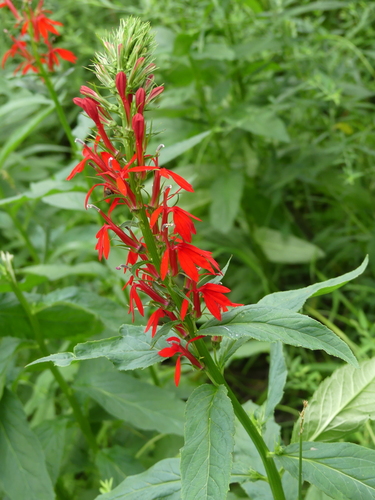
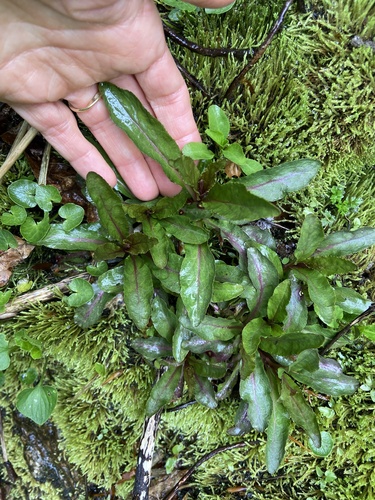
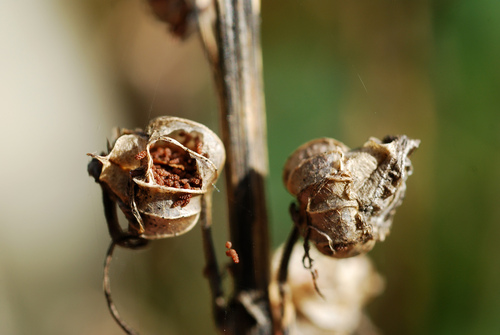
Cardinal Flower
Lobelia cardinalis
Care
part shade, full sun
moderate
Slow, Standing; Moist, rich soils.
3–6ft tall , 2–5ft wide
Jun-Aug
Evergreen
Resistant
Friendly
Prized
Riparian areas and wet habitats of northern and central California, below 3000 ft elevation, extending to the eastern United States
Care Guide
Planting
Plant Cardinal Flower in part shade to full sun in moist, rich soil with slow drainage or in areas that stay wet - it thrives in conditions similar to stream bottoms and boggy spots. Space plants about 3 feet apart since they grow 3–6 feet tall. Plant in spring or early summer to give the plant time to establish before winter. If your Bay Area soil drains too quickly, amend it heavily with compost or plant near a water feature where moisture lingers naturally.
After Planting
Keep the soil consistently moist through summer; water weekly if rain doesn't fall. Once established (by fall of year one), Cardinal Flower is fairly low-maintenance and cold-hardy through freezing temperatures. The #1 mistake is letting the soil dry out - this plant is not drought-tolerant, so if you're in a dry microclimate or planting away from a water source, it will struggle. Note that all parts of the plant are toxic, so wear gloves when handling and keep it away from children and pets.
Endangered & Threatened Species Supported
California Species of Special Concern; monarch populations declining
Wildlife Supported
Birds

Primary nectar source during migration through eastern North America; critical spring and fall fuel stops

Important nectar source during westward migration and breeding season staging

Occasional visitor in southwestern regions; seasonal nectar resource
Insects

Critical nectar source during spring and fall migration; fuel for long-distance flights

Adult nectar resource across multiple generations

Adult nectar resource; multiple broods utilize flowers

Specialist pollen forager; utilizes cardinal flower pollen when available

Adult nectar visitor; multiple generations utilize flowers
Mammals

Deer browse foliage and stems; plant preferred in some regions; overwinter food source