← Back to results

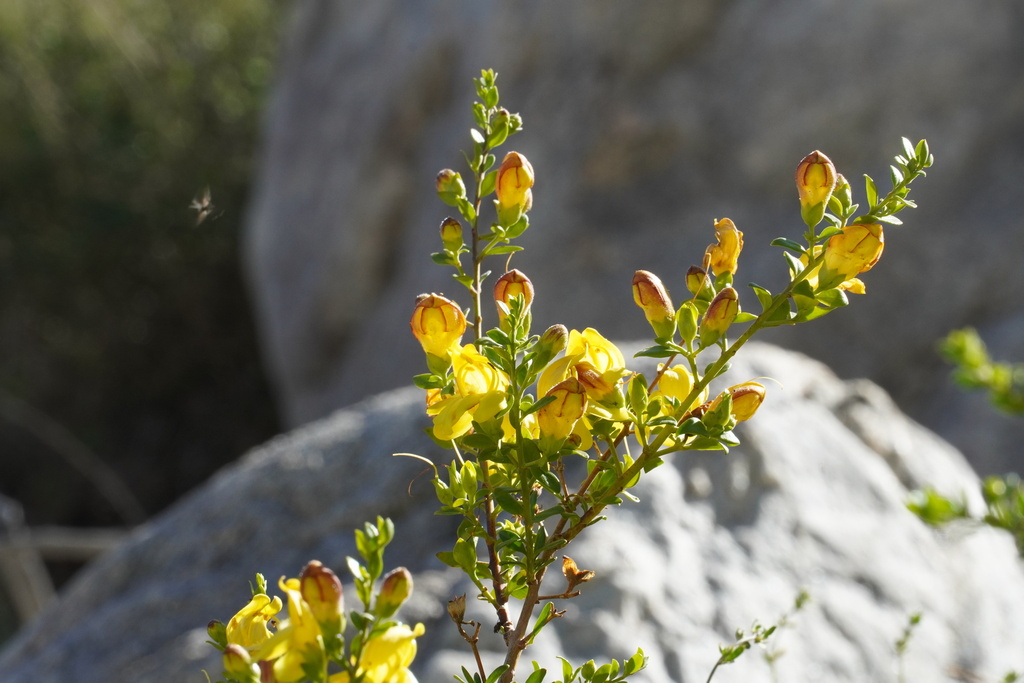
Yellow Bush Penstemon

Keckiella antirrhinoides

perennial herb View on Calscape

Care

Sun

full sun, part shade

Water

low

Soil

Fast, Medium; Tolerates a variety of soils as long as adequate drainage is provided.

Size

2–7ft tall , 2–4ft wide

Bloom

Mar-May

Foliage

Deciduous

Deer

Resistant

Flowers

Prized

Native Range

Chaparral and oak woodlands of southern California mountains and foothills, 1500-5000 ft elevation

Care Guide

Planting

Plant your Yellow Bush Penstemon in full sun with fast-draining to medium soil - drainage is non-negotiable for this chaparral native. It tolerates a variety of soil types as long as water doesn't linger, so amend heavy clay with compost or coarse sand before planting. Spring is your best window for planting in the Bay Area. Space plants 3–4 feet apart, as they'll grow 2–7 feet tall and spread with age.

After Planting

Water weekly during your first summer to establish roots, then taper to once or twice monthly once established - this plant thrives on drought and actually prefers neglect. Expect significant leaf drop after flowering (spring through May) and again during dry periods; this is normal deciduous behavior, not a sign of stress. Prune lightly after flowering if you want to shape it, but resist the urge to fuss - the #1 mistake is overwatering, which kills this plant faster than heat or cold ever will. It'll handle Bay Area winters down to 0°F with no problem.

Visit Calscape for more information about Yellow Bush Penstemon

Endangered & Threatened Species Supported

Crotch's bumblebee Bombus crotchii
CA: Endangered

Listed under California ESA; range has contracted significantly

Henning's Checkerspot butterfly Euphydryas chalcedona hennei
CA: Endangered

California endemic subspecies; restricted range in Kern County

Chalcedon Checkerspot Euphydryas chalcedona
CA Special Concern

California Species of Special Concern

Corralensis Checkerspot butterfly Euphydryas chalcedona corralensis
CA Special Concern

California Species of Special Concern

Wildlife Supported

Insects

Larval Host · Spring

Critical larval food plant for caterpillars in spring; host plant utilization subspecies-dependent

Larval Host · Spring

Nominal subspecies; primary host plant in coastal California populations

Larval Host · Spring

Subspecific host plant relationship; larvae feed on foliage in spring months

Larval Host · Spring

Subspecific population utilizing this host plant; early spring caterpillar development

Nectar · Spring

Important early spring nectar source for queen establishment and colony founding

Larval Host · Spring

Caterpillar host plant; spring larval development period

mod Honey bee
Nectar · Spring

Pollen and nectar collection during bloom period; supports managed hive populations

Birds

Seeds · Fall

Seed consumption in fall; year-round resident utilizing available seed resources

Nectar · Spring

Spring blooms provide early season nectar for resident and migrant hummingbirds

Where to Buy

East Bay Wilds

2110 Eighth St, Suite 202, Berkeley

Fri 9:30am-4pm (occasional Sat, call ahead)

1.5 mi (510) 409-5858 Website