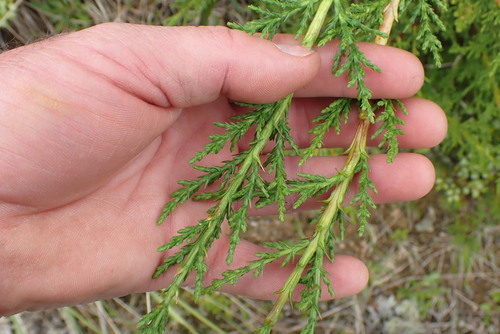
Citriodora Monterey Cypress
Hesperocyparis macrocarpa 'Citriodora'
Care
full sun, part shade
low
59–82ft tall
Resistant
Yes
Coastal bluffs of Monterey County near Monterey Peninsula, below 200 ft elevation
Care Guide
Planting
Plant your Monterey Cypress in full sun with well-draining soil - it tolerates acidic, nutrient-poor soil as long as water moves through freely. Space it generously; this tree grows 59 to 82 feet tall and needs ample room to develop its mature sculptural form. It thrives in cool, moist coastal Bay Area conditions, but if you're planting inland or in warmer microclimates, be prepared to provide additional water beyond what nature provides.
After Planting
Water regularly during the first growing season to establish a deep root system, then transition to low water once established - the exact timeline depends on your location's summer heat and coastal influence. Avoid overwatering and poor drainage, which are the main threats to this tree; think of it as adapted to coastal conditions rather than as a plant that needs pampering. Pruning needs aren't specified in available data, so monitor your tree's natural growth habit and prune only if needed for structure or safety.
Visit Calscape for more information about Citriodora Monterey Cypress
Wildlife Supported
Insects

Bark beetle colonizer of cypress; multi-generational in California

Larvae feed in developing cypress cones and seeds; critical seed predator

Larvae develop in stressed/weakened cypress wood; adults emerge late spring

Larvae tunnel through cypress heartwood; extended development cycle

Sap-feeding on cypress foliage; populations peak spring-fall
Larvae feed on cypress foliage; multiple generations possible
Parasitoid larvae develop within cypress seeds; reduces seed viability

Larvae develop in cypress branch tips; damage terminal growth
+1 more species