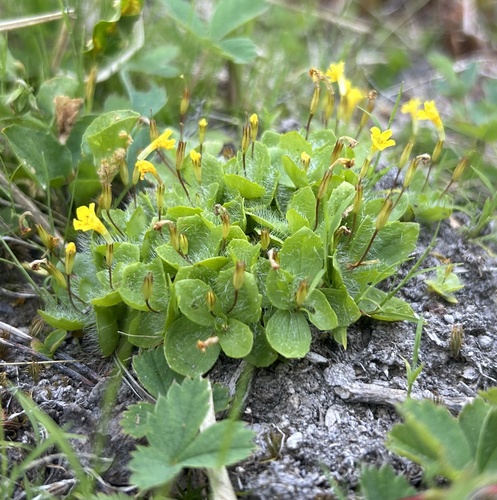
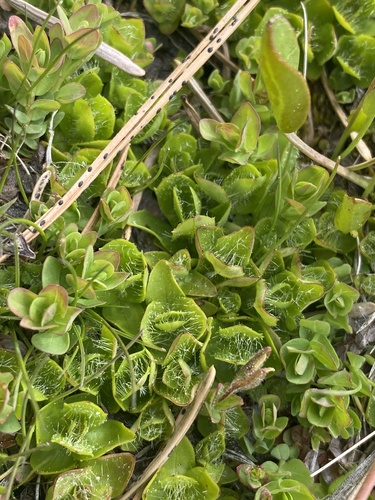
Primrose Monkey Flower
Erythranthe primuloides
Care
full sun
high
Prefers loamy or clay soils. Grows poorly in sandy soils.
0–0ft tall
Jan-Dec
Friendly
Prized
Wet meadows and riparian areas of the Sierra Nevada and northeastern California, 4000-9000 ft elevation
Care Guide
Planting
Plant your primrose monkeyflower in full sun in loamy or clay soil - avoid sandy soils where this plant struggles. It thrives in consistently moist conditions, so choose a spot that mimics its natural streamside habitat, such as near a rain garden, low-lying area, or container where you can control moisture. Space plants about 6 inches apart since they grow in low mats and spread via rhizome and stolon. Plant in early spring or fall to establish before summer heat.
After Planting
Water frequently during your first growing season to keep soil consistently moist, especially through your first summer. This is a water-loving plant that won't tolerate drought, so never let the soil dry out completely. The plant grows only 2–5 inches tall and spreads horizontally, so pruning is minimal - simply remove dead growth in spring. Your biggest mistake will be underwatering or planting in sandy soil; treat this like the moisture-loving native it is, and you'll have bright yellow flowers blooming through winter and spring.
Visit Calscape for more information about Primrose Monkey Flower
Endangered & Threatened Species Supported
Listed under ESA; California Species of Special Concern
Wildlife Supported
Insects

early season nectar source during spring foraging

spring generation nectar source

spring emergence and breeding season nectar

larval feeding on foliage during spring growth period

spring bloom nectar and pollen source
Birds

spring migration stopover and breeding season nectar source

early spring nectar source during breeding season preparations

spring ground cover for foraging habitat in grassland communities