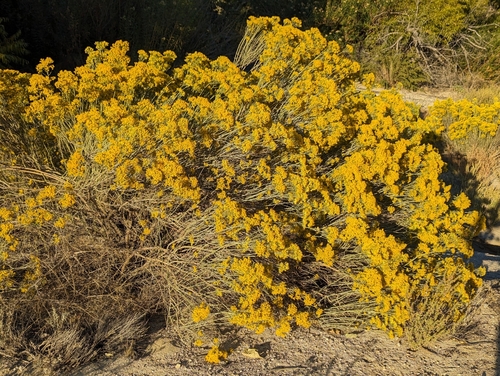
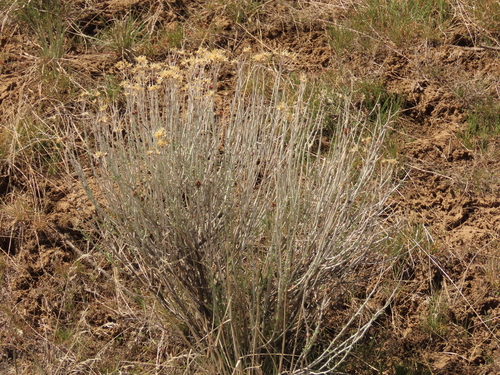
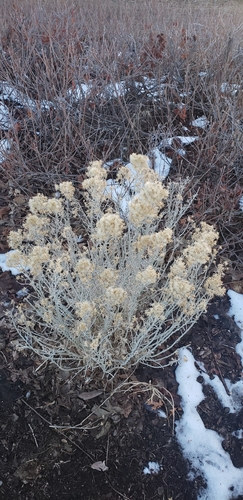
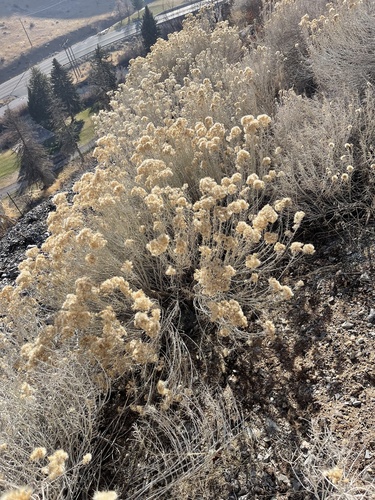
Rubber Rabbitbrush
Ericameria nauseosa
Care
full sun
very low
Fast; Prefers sandy or decomposed granite soil. Tolerates sodic soil..
3–9ft tall , 3–9ft wide
Jun-Nov
Deciduous
Resistant
Yes
Desert scrub and pinyon-juniper woodlands of the Mojave and Colorado deserts in southeastern California, 2000-5500 ft elevation; extends to Nevada and Arizona.
Care Guide
Planting
Plant your rubber rabbitbrush in full sun in sandy or decomposed granite soil with fast drainage - this is non-negotiable. Bay Area clay? Amend heavily or plant in a raised bed. Space plants 3 to 5 feet apart depending on your desired final size (they range from 3 to 9 feet). Fall through early spring is the best planting window to let roots establish before summer heat.
After Planting
Water weekly for the first summer to get the plant established, then wean off completely - once established, never irrigate again. In winter, prune to shape the shrub and encourage next year's flowers; this plant is deciduous and will drop leaves seasonally. The #1 mistake Bay Area gardeners make is overwatering or planting in heavy soil; rubber rabbitbrush wants neglect, not fussing. You'll see blooms by late summer (June through November), with minimal work required.
Visit Calscape for more information about Rubber Rabbitbrush
Endangered & Threatened Species Supported
Listed under ESA in 2015; state listing follows federal status
California Species of Special Concern; monarch populations declining
California candidate species
Wildlife Supported
Birds

Primary winter browse; critical component of winter diet in sagebrush-steppe habitats
Insects

Solitary bee; important spring and summer forager

Important nectar source during fall migration staging Sep-Oct in western populations

Regional pollinator in arid western habitats; forage flights throughout bloom period

Primary pollinator; visits flowers for nectar and pollen collection

Larval host plant; caterpillars feed on foliage

Desert grasshopper; feeds on shrub foliage during active season

Polyphagous herbivore; utilizes as food source during growing season

Regional butterfly species; nectars on flowers during flight season
+4 more species