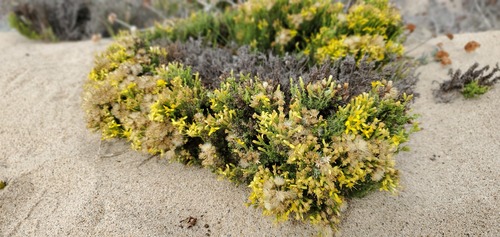
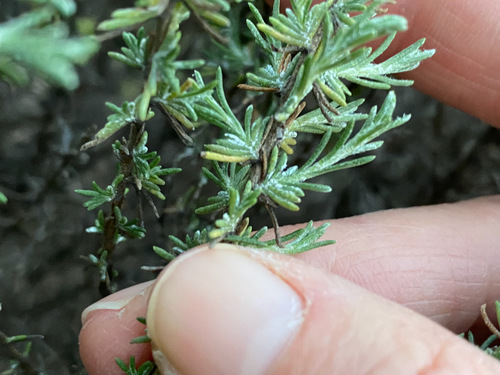
Mock Heather
Ericameria ericoides
Care
full sun
low
Fast; Sandy dunes. Tolerates saline soil..
2–4ft tall , 3–4ft wide
Jun-Nov
Evergreen
Resistant
Friendly
Prized
Desert scrub of the Mojave and Colorado deserts in southeastern California, 1000-4000 ft elevation.
Care Guide
Planting
Plant Mock Heather in full sun with fast-draining, sandy soil - it thrives in the sandy dune conditions it evolved in and tolerates saline soil, making it ideal for Bay Area coastal gardens. Space plants to accommodate their mature height of 2 to 4 feet. Plant in fall or winter when the plant can establish roots before summer heat arrives.
After Planting
Water weekly during your plant's first summer to establish it, then transition to once monthly or less during summer once established. After the first year, you can largely let rainfall handle watering except during extended dry spells - this is a low-water plant that actually struggles with too much irrigation. Pruning information isn't specified in the plant data, so start by observing its natural form; the #1 mistake Bay Area gardeners make is overwatering, which will kill this drought-adapted native faster than anything else.
Endangered & Threatened Species Supported
California Endangered Species Act listing
California state threatened species
Wildlife Supported
Insects

Forage resource during colony expansion period

Larvae develop on plant tissues in spring months

Larvae feed on foliage during spring emergence

Larvae develop on plant tissues in spring and early summer

Larvae tunnel through wood and stems during summer

Nocturnal herbivory on stems and foliage

Caterpillars feed on foliage in spring months

Caterpillars utilize foliage during summer breeding season
+5 more species