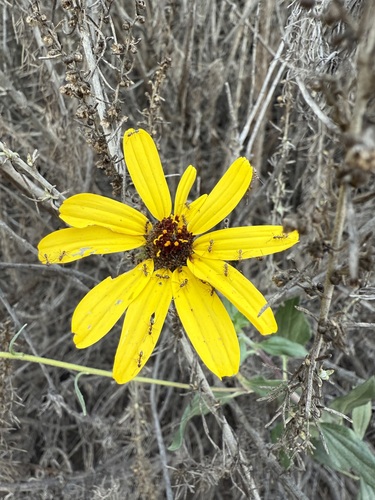
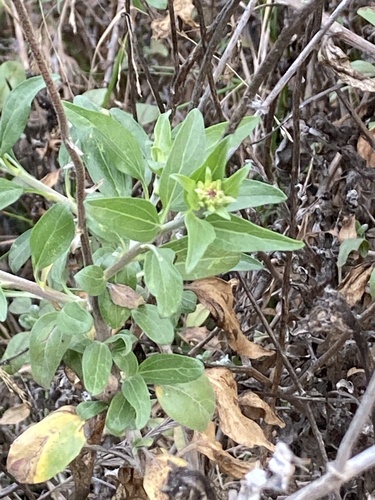
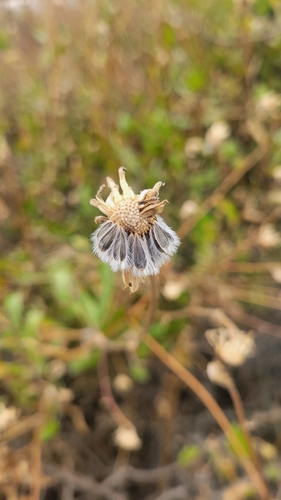
El Dorado Coast Sunflower
Encelia californica
Care
part shade, full sun
very low
Fast, Medium, Slow; Tolerates a wide variety of soils. Tolerates sodic soil..
2–5ft tall , 3–7ft wide
Jan-Dec
Deciduous
Resistant
Friendly
Prized
Coastal bluffs and sandy scrub from Santa Barbara to San Diego counties, below 1500 ft elevation.
Care Guide
Planting
Plant your El Dorado Coast Sunflower in full sun (it tolerates part shade but prefers full sun) in a location with fast-draining soil - it thrives in a wide variety of soil types and will grow in poor or alkaline soils where other plants struggle. This is a fast-growing shrub that can spread aggressively, so give it space away from smaller plants or place it where its vigor is an asset, like on a slope or as a groundcover. Plant in fall or winter if possible to establish roots before summer.
After Planting
Water weekly during the first summer to help it establish, then cut back to once a week or less once established - this plant needs very little water and will naturally go dormant in summer, turning brown and sparse. In year one, expect vigorous growth and plan to cut it back in late winter or early spring to encourage compact, healthy new shape; deadheading spent flowers will extend blooming through spring. The biggest mistake is overwatering: if it looks stressed in summer, that's normal dormancy, not a cry for help - resist the urge to water frequently.
Visit Calscape for more information about El Dorado Coast Sunflower
Endangered & Threatened Species Supported
California Species of Special Concern; monarch populations declining
Wildlife Supported
Insects

Critical fall migration fuel source Sep-Oct; spring breeding resource

Larval and adult foliage feeding; native host specialist

Opportunistic forager; potential honeydew tending competitor

Extended breeding season through fall

Year-round opportunistic visitor; population irruptions fuel

Crepuscular and nocturnal nectar foraging
Mammals

Seed cache collection and consumption Sep-Feb