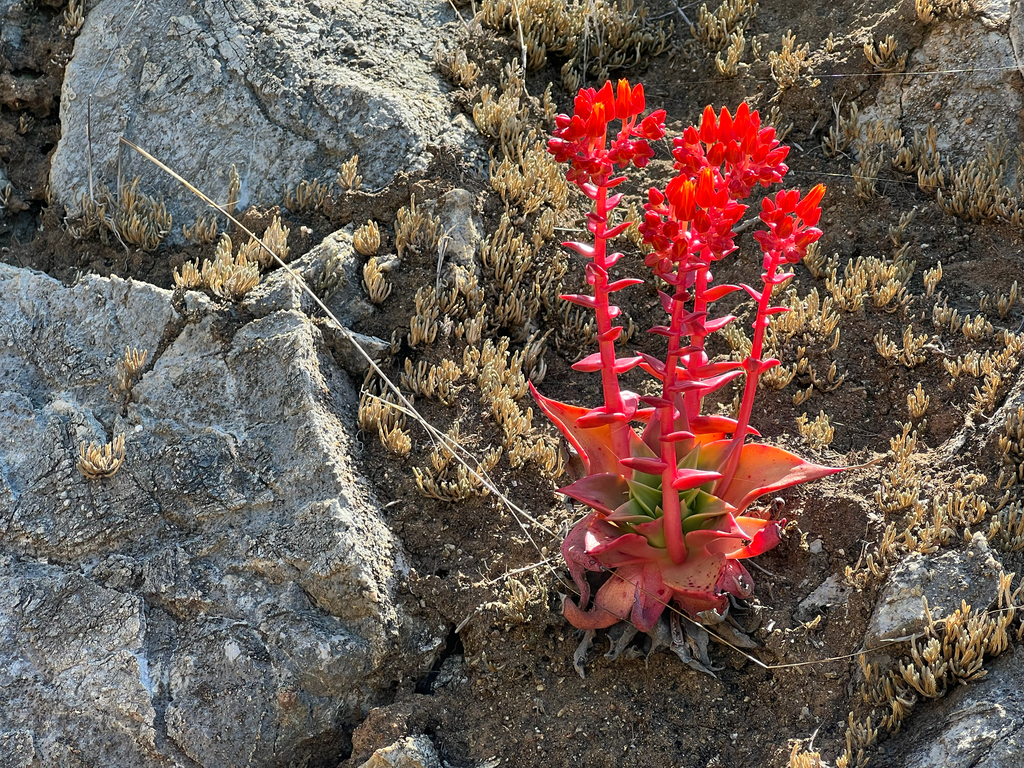
Palmer's Live-for-ever
Dudleya palmeri
Care
very low
0–0ft tall
Resistant
Friendly
Leaves eaten raw or cooked; traditionally consumed as food
Coastal bluffs and chaparral of San Luis Obispo and Santa Barbara counties, below 1000 ft elevation.
Care Guide
Planting
Plant Palmer's Liveforever in a container or well-draining location - this coastal succulent needs excellent drainage to thrive. While sun exposure specifics aren't detailed in the data, its native habitat along the California coast suggests it tolerates coastal conditions. Space plants about 8 inches apart if grouping multiple rosettes, and plan to plant during the mild Bay Area seasons (fall through spring) when establishment stress is lowest.
After Planting
Water very sparingly once established; this plant's "liveforever" name reflects its drought tolerance, and overwatering is the #1 killer of Dudleya species. Reduce watering frequency as the plant matures through its first year, moving toward the minimal water schedule this native coastal plant requires by year two. Deer won't bother it, and you can enjoy the tall pink or green flower stems with yellow-to-red blooms without much intervention beyond leaving it mostly alone.
Visit Calscape for more information about Palmer's Live-for-ever
Wildlife Supported
Birds
Early season nectar source during spring migration and breeding establishment
Critical early spring energy source in desert scrub habitat
Insects
Larval host plant; caterpillars feed on succulent foliage in spring
Potential larval host for desert populations
Mammals
Browsing on succulent leaves; important drought-resistant food source
Opportunistic foraging on accessible foliage and moisture