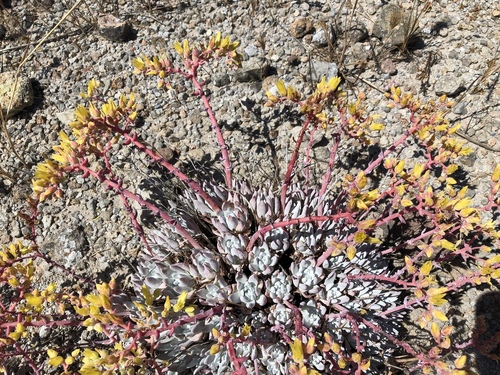
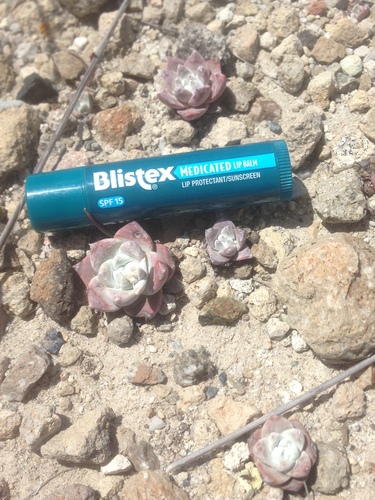
Munchkin Dudleya
Dudleya gnoma
Care
very low
0–0ft tall
Resistant
Friendly
Leaves eaten raw or cooked; succulent leaves as emergency food
Chaparral of the Transverse Ranges in Los Angeles and Ventura counties, 2000-4000 ft elevation.
Care Guide
Planting
Plant your Munchkin Dudleya in a container or well-draining spot where it can get plenty of sun - this rare succulent from Santa Rosa Island needs excellent drainage to thrive. Space plants to allow room for the clumps of small rosettes to spread naturally, and give each plant enough breathing room so air can circulate around the foliage. This is an excellent choice for container gardening if you're worried about drainage or want to move it seasonally.
After Planting
Water very sparingly once established - this is a drought-tolerant succulent that prefers dry conditions and will rot if overwatered. In spring, watch for a foot-tall flower stalk with small yellow flowers that will attract hummingbirds and butterflies to your garden. The #1 mistake people make with Dudleyas is watering too often; err on the side of underwatering, and only water during the driest periods. Avoid touching the waxy, powdery coating on the leaves, as it protects the plant and is easily rubbed off.
Endangered & Threatened Species Supported
San Diego County endemic; narrow habitat
California threatened species; population decline in state
Wildlife Supported
Insects

Primary blooming period supports native bees and small pollinators
Early spring foraging for emerging colonies

Spring flowers provide early season nectar source
Mammals

Occasional browsing of succulent foliage during drought stress periods

Grazes on accessible rosette leaves as available forage

Herbivorous diet includes succulent foliage; available year-round in drought-tolerant rosettes
Reptiles

Uses plant clumps for cover and thermoregulation in arid habitats

Dense rosette clumps provide refuge from predators and thermal microhabitats