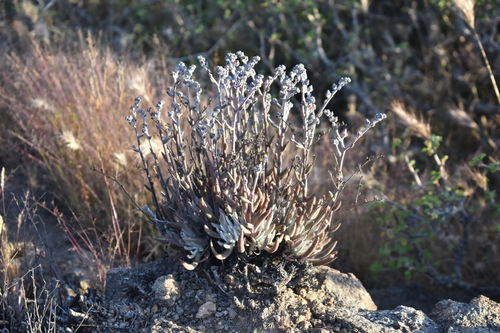
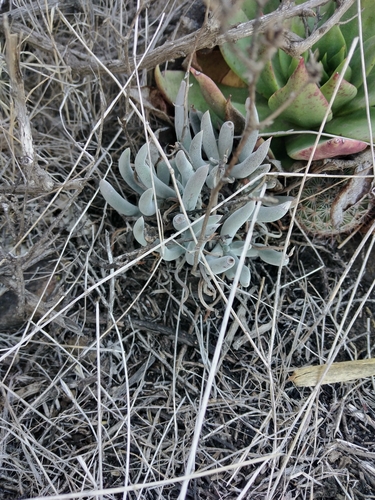
Orcutt's Live-for-ever
Dudleya attenuata ssp. attenuata
Care
full sun
very low
0–0ft tall
Mar-Aug
Resistant
Friendly
Leaves eaten raw or cooked, consumed fresh as emergency food
Coastal bluffs and scrub from San Diego to Orange counties, below 1000 ft elevation.
Care Guide
Planting
Plant Orcutt's Live-for-ever in full sun in a spot with excellent drainage - this coastal native thrives in lean, well-draining soil and won't tolerate boggy conditions. Space plants about 6–12 inches apart depending on your desired coverage, as this is a low-growing succulent (under a foot tall) that works well in containers or rock gardens. Plant in spring for best establishment before summer heat arrives.
After Planting
Water sparingly during the first growing season to establish roots, then transition to very low water once established - think once or twice monthly during the dry season, if at all. Orcutt's Live-for-ever requires almost no pruning; just remove any dead leaves or spent flower stems after blooming ends (late summer). The biggest mistake gardeners make is overwatering: this plant evolved on coastal bluffs and chaparral where water is scarce, so err on the side of neglect rather than generosity.
Visit Calscape for more information about Orcutt's Live-for-ever
Endangered & Threatened Species Supported
Coastal sage scrub species; habitat loss
Coast horned lizard, coastal sage scrub specialist
Wildlife Supported
Insects
Queens and workers forage on early spring blooms for protein and energy
Spring-emerging species utilize early succulent flowers
Feeds on succulent leaves; active during warm periods

Opportunistic foraging during bloom season on succulent flowers

Primary flowering period attracts native bees and small insects
Mammals

Harvests succulent leaves and stems during dry season when other resources scarce

Uses as food source year-round in arid scrub habitat; drought tolerant plant ensures food availability

Grazes on rosette leaves; accessible year-round food in arid environments
Reptiles
Uses succulent patches as cover and ambush hunting sites for harvester ants

Dense rosettes provide microhabitat refugia and thermoregulation basking sites