Shrubby Cinquefoil
Dasiphora fruticosa
Care
full sun
low
Does well in moisture retentive soils and moist rocky areas.
0–4ft tall
Jun-Nov
Deciduous
Resistant
Friendly
Prized
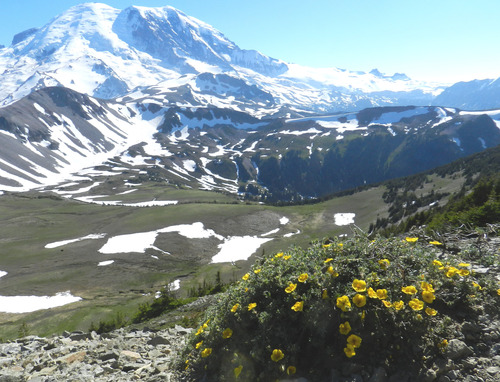
Subalpine meadows and riparian areas of the Sierra Nevada and Cascade Range, typically above 5000 ft elevation; extends to northern California.
Care Guide
Planting
Plant your Shrubby Cinquefoil in full sun and in soil that retains moisture well - it thrives in the kind of conditions you'd find in moist rocky areas, so amend heavy clay with compost if needed to improve drainage while keeping some moisture-holding capacity. Space plants about 3-4 feet apart since they'll grow 1-5 feet tall depending on variety. Fall through early spring is your best planting window in the Bay Area to let roots establish before summer heat.
After Planting
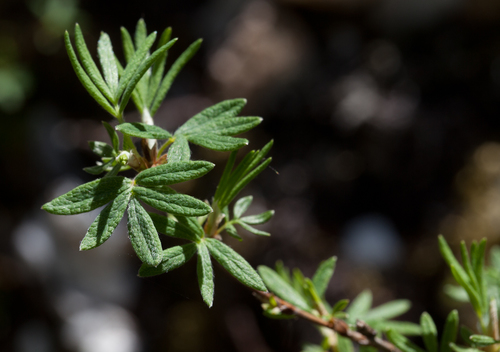
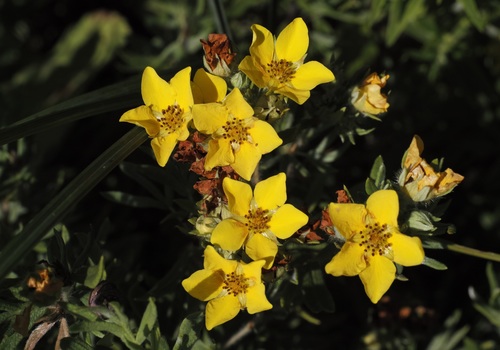
Water weekly through your first summer to help the plant establish, then gradually reduce watering frequency as it matures - this is a low-water plant once settled in, though it can handle moderate water if your soil drains well. Since it's deciduous, expect it to drop its leaves in winter and come back leafy in spring; this is completely normal. Prune in late winter or early spring to shape the plant and remove any dead wood, and deadhead spent flowers through summer to encourage more blooms through fall. The biggest mistake is overwatering in year two and beyond - this plant evolved in cool mountain regions and actually prefers drier conditions once established, so err on the side of dry rather than wet.
Visit Calscape for more information about Shrubby Cinquefoil
Endangered & Threatened Species Supported
Desert bighorn sheep listed as Threatened under CESA
Wildlife Supported
Birds

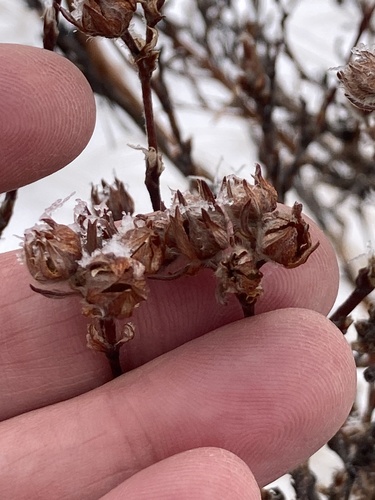
Seed consumption during autumn; important winter diet component

Alpine populations harvest seeds in September-October

Small seeds accessible to finch guild
Insects

Extended bloom period provides sustained forage

Primary nectar source during bloom period

Specialist pollinator; larvae provisioned with potentilla pollen

Early season nectar source before alpine wildflowers peak

Adult nectar foraging; larvae aphid predators on potentilla

Early spring pollen source for emerging solitary bees

Mid-summer foraging on shrub flowers

Generalist pollinator visiting throughout bloom
Mammals

Alpine spring/early summer forage quality critical for reproduction
Year-round browse; preferred spring/early summer growth; winter emergency food