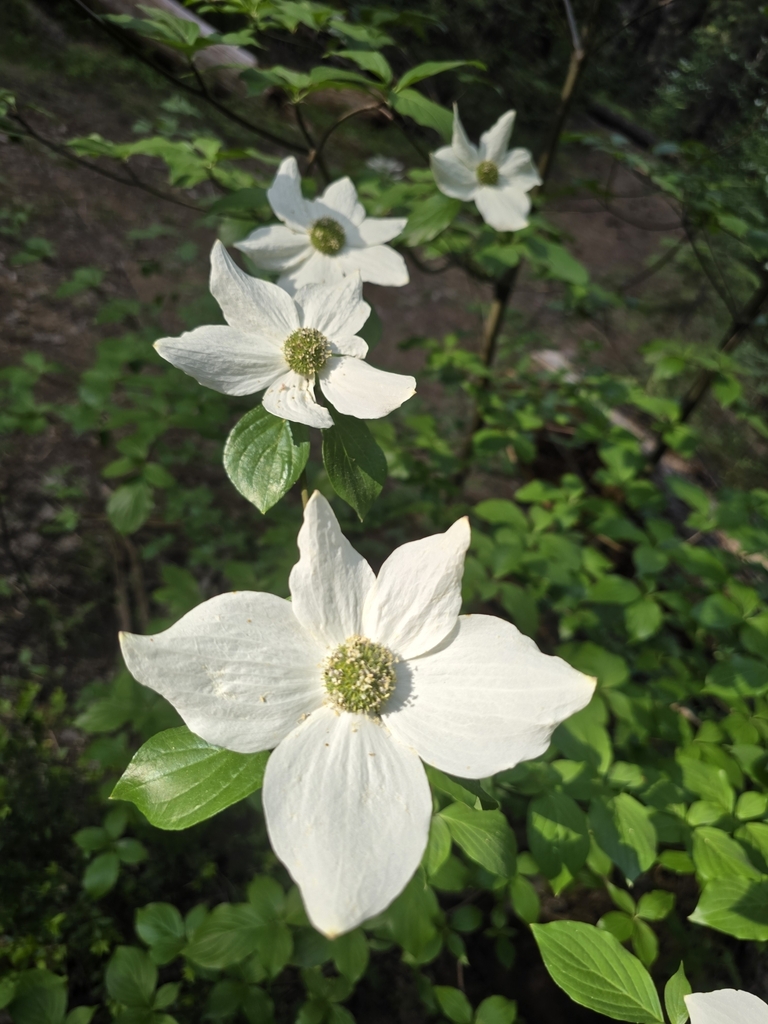
Pacific Dogwood
Cornus nuttallii
Care
part shade
moderate
Fast; Prefers soil that is cool, moist, deep, well-drained and high in organic matter.
12–66ft tall , 6–30ft wide
Mar-May
Deciduous
Prized
Supports up to 58 butterfly and moth species in Mediterranean California
Coast Ranges and Sierra Nevada foothills from Humboldt County to San Diego County, typically 500-5000 ft elevation in mixed conifer and oak forests.
Care Guide
Planting
Plant your Pacific Dogwood in part shade with cool, moist, deep, well-draining soil rich in organic matter - this is non-negotiable for success in the Bay Area. Position it among smaller companion plants so that as it matures, its branches can eventually reach into direct sun. Spring is the ideal planting season, and make sure the soil drains fast; if your garden tends toward clay or poor drainage, amend heavily or choose a different location.
After Planting
Water occasionally throughout your first summer to help it establish, then stop all supplementary irrigation - this tree doesn't want summer water once it's settled in. Avoid digging or disturbing the soil within a few feet of the trunk, as this damages its root system. Year one is about establishment; by year two, your dogwood should be largely self-sufficient, leafing out in spring, flowering March through May, and dropping leaves in fall. The biggest mistake Bay Area gardeners make is overwatering once the tree is past its first season - resist the urge.
Endangered & Threatened Species Supported
California Species of Special Concern
Wildlife Supported
Birds
Important fruit source for fall migrants and wintering populations; drupes consumed Aug-Oct
Critical food source during fall migration and winter in Pacific Northwest; dogwood drupes consumed Aug-Nov
Feeds on dogwood drupes; important late-season food source for resident California populations
Insects
Wood-boring and bark beetles utilize dead and declining dogwood stems; important decomposer role
Multiple moth species use Pacific Dogwood as larval host plant; critical for spring emergence
Wood-boring beetle larvae develop in dead and dying dogwood stems and branches
Early season nectar source for hoverflies and other pollinators
Larvae feed on new foliage; host plant relationship documented in Pacific Northwest
Early-season larval host; caterpillars feed on emerging leaves
Early spring nectar and pollen source for native bees emerging from overwinter dormancy