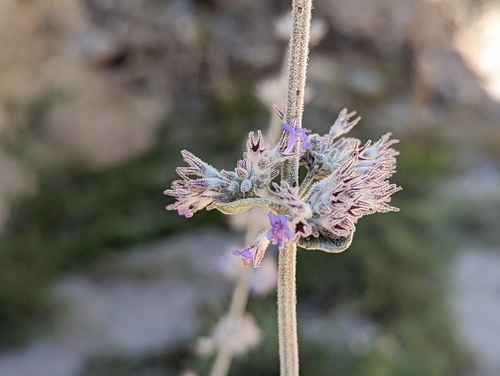
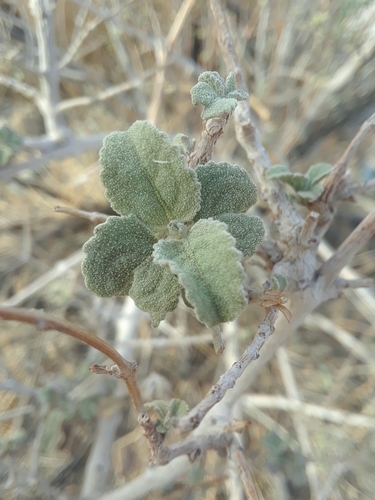
Desert Lavendar
Condea emoryi
Care
full sun
very low
Fast; Prefers sandy or decomposed granite soil.
6–12ft tall , 8–8ft wide
Jan-Dec
Deciduous
Resistant
Friendly
Yes
Colorado and Sonoran Desert scrub in southeastern California (San Bernardino, Riverside, and Imperial counties), below 2500 ft elevation.
Care Guide
Planting
Plant your desert lavender in full sun with fast-draining soil - sandy or decomposed granite is ideal. Space it according to your mature size needs: this shrub grows 6–12 feet tall and up to 8 feet wide, so give it room to spread. Plant in fall or winter when temperatures are mild to help it establish before summer heat. Avoid heavy clay soils that retain moisture, as this plant demands excellent drainage.
After Planting
Water weekly during your first summer to establish a strong root system, then taper to once monthly by late summer and fall. Once established, desert lavender is extremely drought-tolerant and needs minimal supplemental water - in the Bay Area's climate, you may rarely need to water it at all. Prune in summer or fall to shape it as desired or maintain it as a hedge; expect some leaf drop during intense summer heat, which is normal for this semi-deciduous plant. The biggest mistake is overwatering: this desert native rots in soggy soil, so err on the side of dry rather than damp.
Endangered & Threatened Species Supported
California Species of Special Concern; monarch populations declining
Wildlife Supported
Birds

Critical winter/early spring nectar source in Sonoran Desert; breeding fuel resource

Year-round resident; year-round nectar resource
Insects

Multiple broods; key larval host plant in desert scrub

Critical breeding host plant for spring/summer generations; fall migrants use for fuel

Year-round breeding host; multiple overlapping generations in desert regions

Spring-summer pollen collection for nest provisioning

Polyphagous breeder; opportunistic host use in desert regions