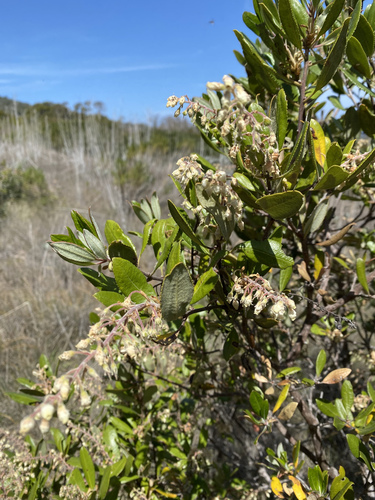
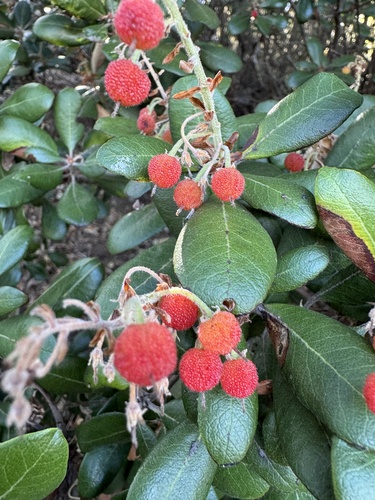
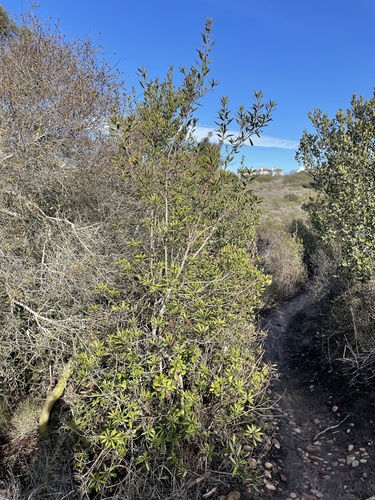
Summer Holly
Comarostaphylis diversifolia
Care
part shade
very low
Fast, Medium; This subspecies prefers eroded sandstone soils of marine deposits that are typical of coastal San Diego County. The preceding is not accurate. This plant is not a subspecies, and it is widespread in Southern California, not just in San Diego County.
10–20ft tall , 3–15ft wide
Mar-Aug
Evergreen
Resistant
Berries eaten fresh or cooked; traditional Indigenous food
Chaparral and oak scrub of the California Floristic Province, from Contra Costa County south to San Diego County, below 4000 ft elevation.
Care Guide
Planting
Plant Summer Holly in fall so it can establish before summer arrives. Choose a spot with part shade and well-draining soil - fast to medium drainage is ideal - preferably near an irrigated area or other slightly damp spot where it can access occasional moisture. Space it on a slope if possible, mimicking its natural habitat on coastal chaparral hillsides. It grows slowly at first, so be patient as it develops.
After Planting
Water regularly during the first year to help establish roots, then dramatically reduce watering once established - this is critical because Summer Holly is extremely intolerant of direct summer water after year one, and summer irrigation will usually kill it. Once established, limit summer watering to once a month at most. Year one is your only window for building a strong root system; after that, let it dry out and rely on the plant's adapted drought tolerance to thrive.
Wildlife Supported
Birds

breeding season nectar source in southwestern California range

rare California visitor during fall migration, opportunistic nectar feeding

late summer vagrant in California, utilizes available nectar
Insects

fungal-feeding beetle larvae utilize decaying plant material

sap-feeding on plant tissues; may form galls on stems and leaves