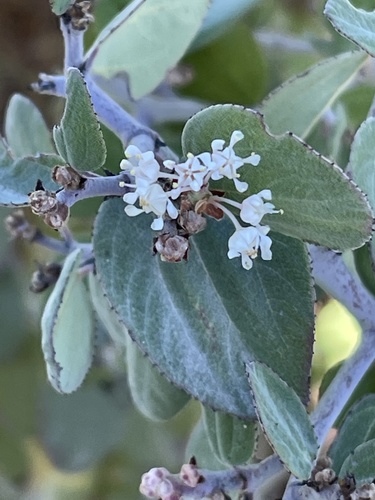
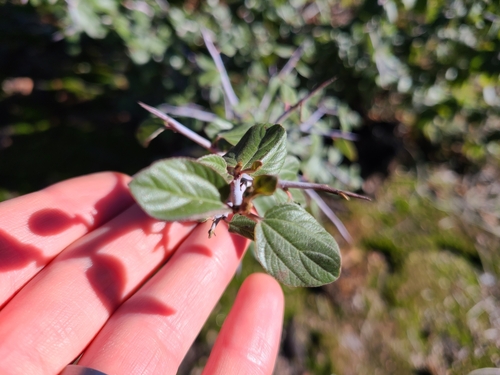
Coast Whitethorn
Ceanothus incanus
Care
13–13ft tall
Evergreen
Resistant
Yes
Prized
Supports up to 120 butterfly and moth species in Mediterranean California
Coastal scrub and chaparral from Marin to Santa Cruz counties, below 1500 ft elevation
Care Guide
Planting
Plant Coast Whitethorn in full sun with well-draining soil, as this native shrub thrives in the mixed evergreen and redwood forest conditions of the Bay Area and North Coast. Space plants to accommodate their mature height of 13 feet and allow for their naturally upright, thorny growth habit. Plant in fall or early winter to take advantage of the rainy season and give your plant the best chance to establish.
After Planting
Water regularly during your plant's first growing season to help it establish, then taper off as it becomes drought-tolerant once mature. Prune selectively after flowering to maintain shape and remove dead wood, but avoid heavy pruning since this species naturally grows upright. The biggest mistake gardeners make is overwatering once the plant is established - Coast Whitethorn is adapted to California's dry summers and prefers infrequent, deep watering over frequent shallow irrigation.
Wildlife Supported
Birds
Utilize dense growth for nesting and shelter in coastal sage scrub habitat

Forage on seeds in late summer and fall when available

Seeds utilized during breeding season supplementing diet in chaparral-adjacent areas
Insects

Larvae feed on foliage April-June during larval development period
Mammals

Browse stems and leaves as part of chaparral forage diet throughout year

Browse foliage as part of chaparral diet, particularly important during winter when herbaceous vegetation scarce

Consume foliage and stems year-round in chaparral and scrubland habitats