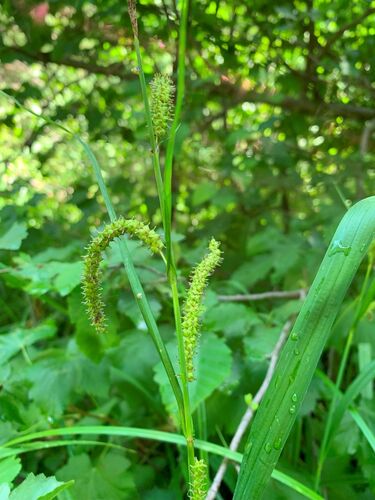
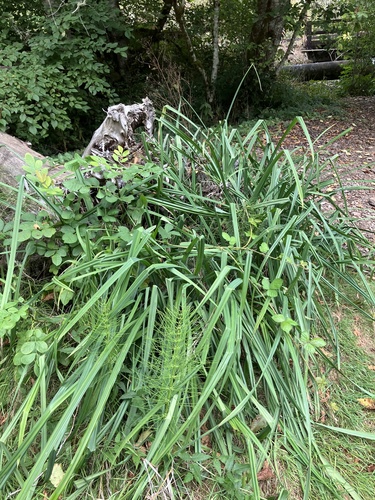
Big Leaf Sedge
Carex amplifolia
Care
2–3ft tall
Friendly
Riparian forests and wetlands in northwestern California from Humboldt to Trinity counties, below 3000 ft elevation, extending to Oregon and Washington
Care Guide
Planting
Plant Big Leaf Sedge in deep shade, where it thrives in its native wet forest habitat. This sedge does best in consistently moist soil, so choose a spot that doesn't dry out completely, and space plants about 2–3 feet apart to accommodate their mature height of 2–3 feet. You can grow it in containers as well, which gives you flexibility in placement and watering control.
After Planting
Water regularly during your first growing season to keep the soil consistently moist while the plant establishes itself. Big Leaf Sedge is moderate in care difficulty, meaning it's not fussy once settled in, but the main mistake is letting it dry out - this is a sedge adapted to wet areas, not drought. You can expect year-round foliage since sedges are generally evergreen or semi-evergreen, providing structure to your shade garden even in winter.
Endangered & Threatened Species Supported
Listed under federal ESA and CESA; Highly threatened species with very limited range
California Clapper Rail; federally and state endangered
California Species of Special Concern
Wildlife Supported
Amphibians

utilizes dense sedge stands for breeding habitat and cover in wetland complexes
Birds

nests in dense sedge marshes March-July, uses culms for nest construction

forages on sedge rhizomes and shoots during fall/winter migration staging Nov-Mar

constructs floating nests from sedge material in shallow marsh wetlands April-June
Mammals

creates and maintains wetland habitat structure through dam building that enhances sedge productivity
Insects

big leaf sedge grows in association with cattail marshes, providing habitat structure for wetland invertebrates and vertebrates