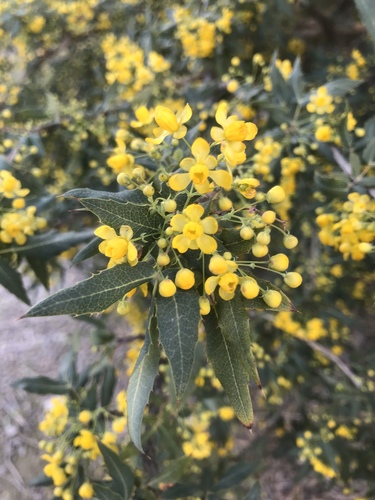
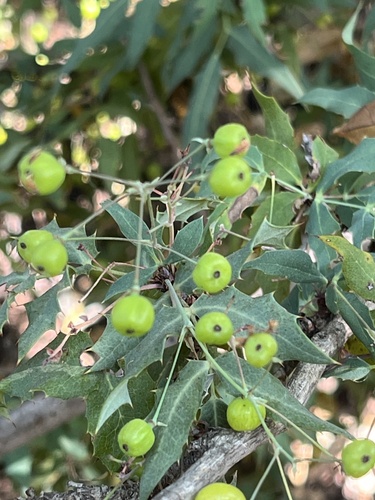
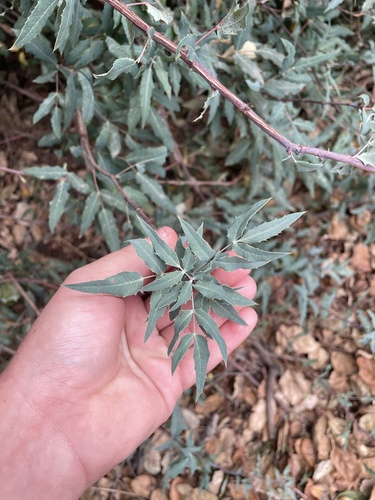
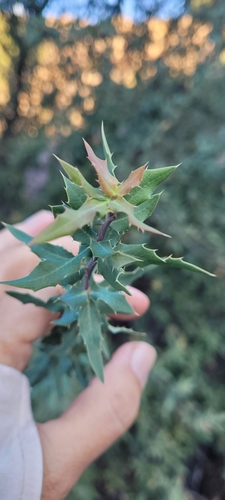
Nevin's Barberry
Berberis nevinii
Care
full sun, part shade
very low
Fast, Medium; Adaptable but prefers coarse well drained soil.
3–7ft tall , 6–12ft wide
Mar-May
Evergreen
Resistant
Friendly
Berries eaten fresh or cooked
Chaparral and coastal sage scrub in San Diego County and Riverside County, below 2000 ft elevation, endemic to southern California
Care Guide
Planting
Plant Nevin's Barberry in full sun in a location away from walkways - those spiny leaves are no joke. It needs fast- or medium-draining soil and is adaptable, though it prefers coarse, well-draining soil, so amend heavy clay if necessary. This slow-growing shrub reaches 3–7 feet tall in the Bay Area and can handle our cold winters down to 15–30°F, so plant in fall or early spring when the soil is workable.
After Planting
Water weekly for the first summer to establish the plant, then taper off to once or twice a month once established - it's quite drought-tolerant. Nevin's Barberry flowers in spring (March–May) with striking yellow blooms followed by red to dark blue berries that birds love. The biggest mistake is overwatering; this plant prefers dry conditions, so let the soil dry out between waterings and hold back on summer irrigation once it's settled in. Prune only as needed to shape it or maintain size; the Calscape data doesn't specify timing, so wait until after spring flowering to avoid cutting off next season's blooms.
Endangered & Threatened Species Supported
California Species of Special Concern; monarch populations declining
Wildlife Supported
Insects

Larvae feed on Berberis foliage during breeding season; critical for population sustenance in southern California populations
Reptiles

Dense growth and thorns provide refuge from predators and thermal regulation; basking sites on adjacent ground