← Back to results

Canyon Dudleya

Dudleya cymosa

succulent View on Calscape

Care

Sun

full sun, part shade

Water

very low

Soil

rocky, well-drained; cliff faces and rock outcrops

Size

0–0ft tall , 0–0ft wide

Bloom

Apr-Jun · yellow, red, orange

Foliage

Evergreen

Deer

Resistant

Container

Friendly

Flowers

Prized

Native Range

California Coast Ranges and foothills

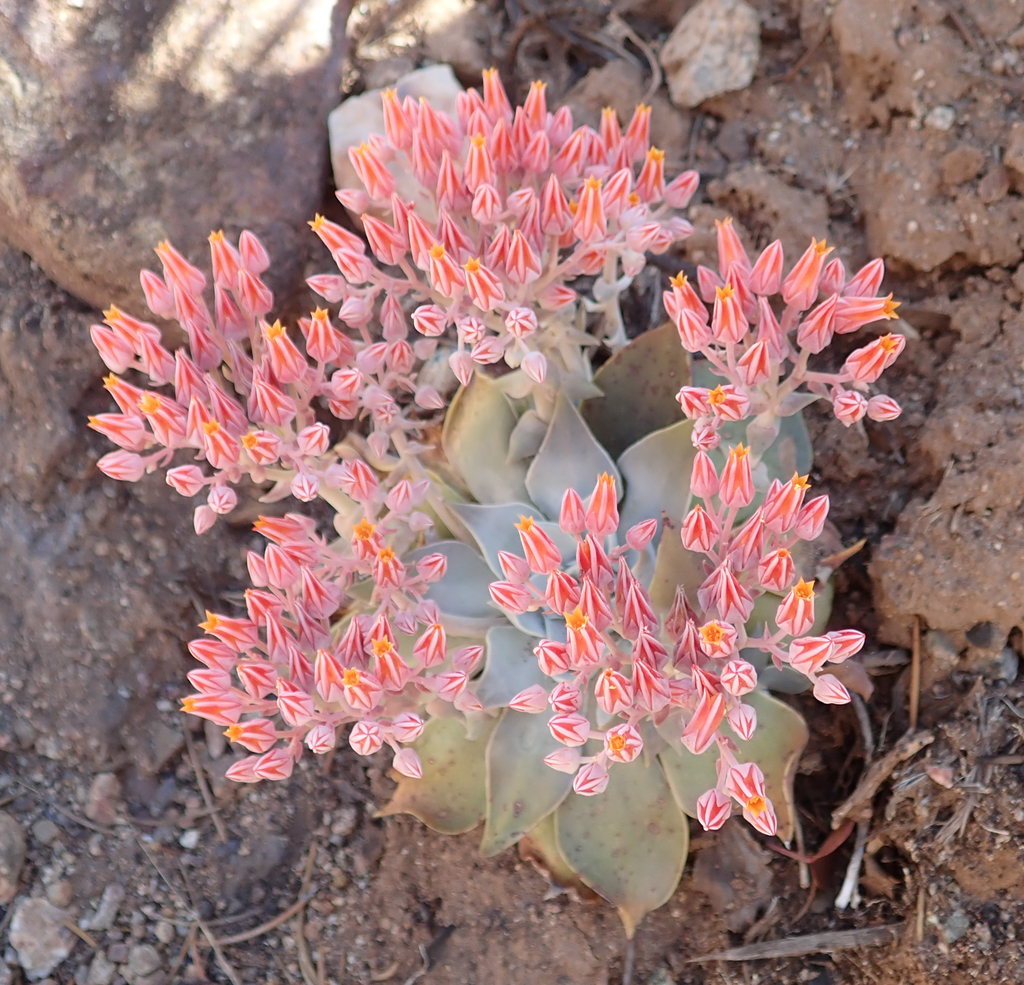
Clusters of bright yellow to red-orange flowers on short stalks

Perfect for rock gardens, walls, and containers; extremely drought tolerant

Care Guide

Planting

Plant your Canyon Dudleya in full sun or part shade in rocky, well-drained soil - think of the steep clay slopes and cliff faces where it naturally grows. Drainage is non-negotiable; if your soil tends to hold moisture, amend it heavily with rock or coarse sand. This is a compact plant (under 6 inches tall), so it works beautifully in containers or in rock gardens where you can control the soil. Plant in spring for best establishment.

After Planting

Water sparingly during the first growing season to help it establish, then stop - once established, never irrigate this plant again. It's built for drought and will rot if overwatered. The biggest mistake Bay Area gardeners make is treating it like a typical plant that needs regular water; resist the urge. Expect red-orange flowering stems with yellow-red flowers in spring (April through June), and know that this evergreen succulent can handle our occasional freezes down to -10°F.

Visit Calscape for more information about Canyon Dudleya

Endangered & Threatened Species Supported

Sonoran Blue butterfly Philotes sonorensis
CA: Endangered

Listed under California Endangered Species Act

Chalcedon Checkerspot Euphydryas chalcedona
CA Special Concern

California Species of Special Concern

Wildlife Supported

Birds

Nectar · Spring

Primary nectar source during Apr-Jun bloom season; supports breeding activities

Insects

Larval Host · Spring

Larvae feed on Dudleya foliage in spring; critical host plant in canyon habitats

Larval Host · Spring

Early season larvae utilize Dudleya foliage; common in chaparral canyons

Larval Host · Spring

Parasitic plant associated with Dudleya in canyon habitats

Larval Host · Spring

Multiple Incisalia species utilize Dudleya as larval host plant

Larval Host · Spring

Caterpillars feed on succulent leaves during spring emergence

Pollen · Spring

Collects pollen during bloom season for larval provisions

Arachnids

Shelter · Year-Round

Lichen grows on Dudleya leaves and stems; provides microhabitat

Where to Buy

Oaktown Native Plant Nursery

702 Channing Way, Berkeley

Wed-Sun 10am-5pm

1.0 mi (510) 387-9744 Website
East Bay Wilds

2110 Eighth St, Suite 202, Berkeley

Fri 9:30am-4pm (occasional Sat, call ahead)

1.5 mi (510) 409-5858 Website
Native Here Nursery

101 Golf Course Dr, Tilden Regional Park, Berkeley

Sat 10am-2pm

3.0 mi (510) 549-0211 Website