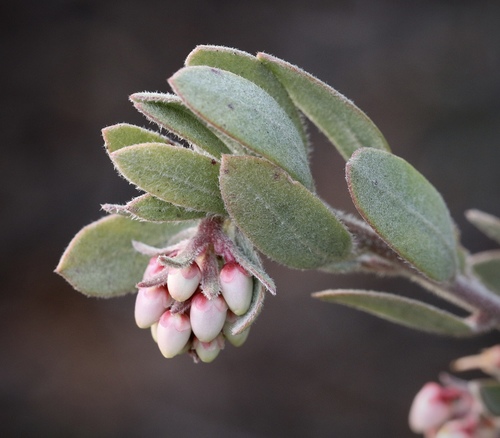
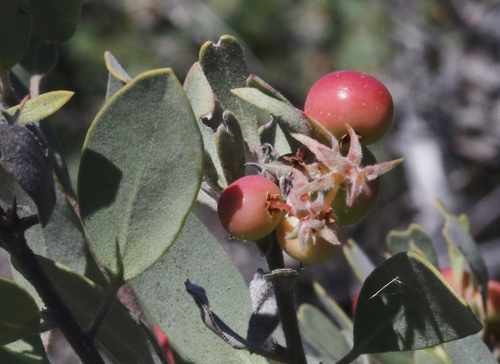
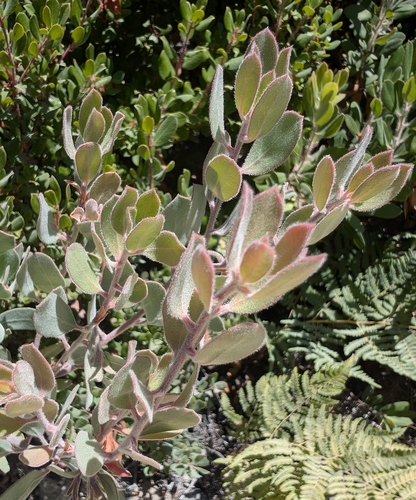
Ghostly Manzanita
Arctostaphylos silvicola 'Ghostly'
Care
full sun, part shade
low
Fast; Prefers sandy soil.
8–20ft tall , 8–20ft wide
Jan-Dec
Evergreen
Resistant
Prized
Berries eaten fresh or made into beverages; traditional Indigenous food source
Supports up to 68 butterfly and moth species in Mediterranean California
Chaparral in the inner Coast Ranges of Napa and Solano counties, 1000-2500 ft elevation
Care Guide
Planting
Plant Ghostly Manzanita in full sun in fast-draining, sandy soil - this is non-negotiable. Space it where it has room to grow into a large shrub or small tree (potentially 8–20 feet tall). The best planting season is fall through early spring when the plant is dormant. If your soil is heavy clay, amend it heavily with sand or plant on a slope to ensure water drains away quickly, since poor drainage will kill this plant faster than anything else.
After Planting
Water weekly during the first growing season to establish roots, then taper off completely by the second year - once established, never water during summer months, even if it looks stressed. Year 1 will be modest growth as the plant focuses on rooting in; this is normal. The #1 mistake Bay Area gardeners make is treating Ghostly Manzanita like a typical ornamental shrub that needs summer watering - resist the urge, especially June through September. Pruning details aren't specified in available data, so consult a local native plant specialist if shaping is needed.
Wildlife Supported
Birds

Important fall/winter food source during migration and overwintering

Year-round resident in California; uses available floral resources when blooming occurs

Migrants and winter residents consume manzanita berries Oct-Feb
Insects

Host-specific aphid; galls form on leaves throughout growing season
Mammals

Occasional browser on foliage; more important in winter when other browse limited