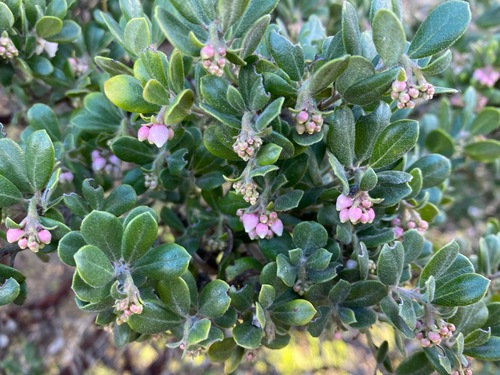
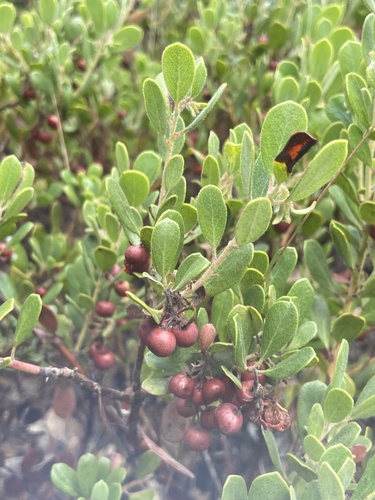
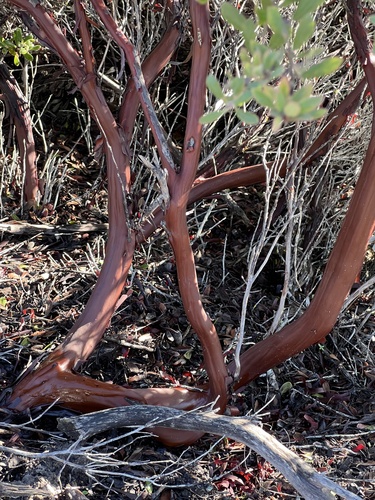
Sandmat Manzanita
Arctostaphylos pumila
Care
full sun, part shade
very low
Fast, Medium, Slow; Reportedly can tolerate clay soil. Tolerates saline soil..
2–5ft tall , 5–5ft wide
Jan-Dec
Evergreen
Resistant
Friendly
Prized
Berries eaten fresh or made into cider; traditional Indigenous use
Supports up to 68 butterfly and moth species in Mediterranean California
Coastal scrub and sandy habitats from Marin County to San Luis Obispo County, below 500 ft elevation
Care Guide
Planting
Plant your Sandmat Manzanita in full sun with well-draining soil - it thrives in sandy conditions but can tolerate clay and even saline soils. Space plants to allow room for their creeping, mat-forming growth habit. Plant in fall or winter to take advantage of the rainy season and reduce establishment watering needs. Avoid planting directly near the coast where salt spray will hit the foliage, though the plant can handle saline soil itself.
After Planting
Water weekly during your plant's first summer, then cut back to a maximum of twice monthly once established - this is a very low water plant that derives moisture from coastal fog in its native habitat. Stop supplemental watering by fall and let winter rains take over. Year one is about establishment; by year two, your manzanita should need almost no summer water. The biggest mistake Bay Area gardeners make is overwatering: this plant will rot in soggy conditions, so err on the side of dry.
Wildlife Supported
Insects

Predatory beetle feeding on aphids and leafhoppers; augments natural pest control
Sap-feeding aphid on manzanita species
Phloem-feeding leafhopper on Arctostaphylos hosts

Endophytic fungal pathogen; can cause branch dieback in stressed plants
Specialist herbivore on Arctostaphylos species; feeds on plant sap

Specialist aphid associated with Arctostaphylos; produces honeydew attracting other insects
Herbivorous leafhopper utilizing manzanita foliage