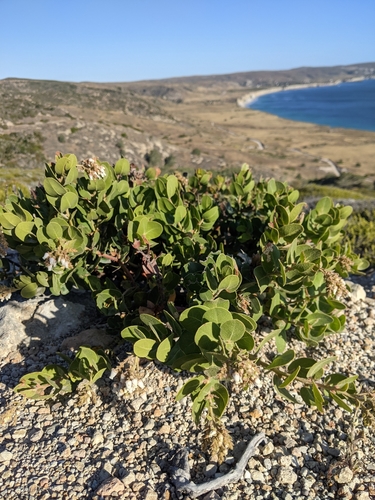
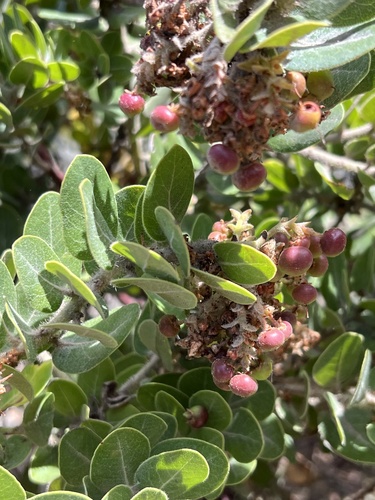
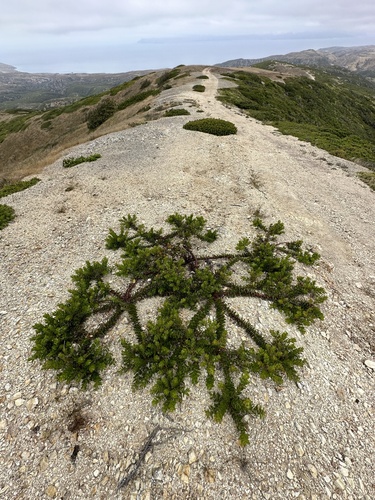
Santa Rosa Island Manzanita
Arctostaphylos confertiflora
Care
0–6ft tall
Evergreen
Resistant
Prized
Berries eaten fresh or made into cider; traditional Indigenous use
Supports up to 68 butterfly and moth species in Mediterranean California
Santa Rosa Island off the coast of Ventura County in the Channel Islands, in coastal sage scrub and chaparral
Care Guide
Planting
Plant your Santa Rosa Island Manzanita in a location with excellent drainage, as this rare species is native to sandstone bluffs and won't tolerate soggy soil. While specific sun and soil requirements aren't documented in available data, manzanitas generally prefer full sun; start with a sunny spot in your garden and monitor performance. Space according to the plant's mature size, which can range from under 1 foot to over 6 feet tall depending on growing conditions.
After Planting
Water regularly during the first growing season to establish a strong root system, then transition to drought tolerance as the plant matures - this timeline typically takes one full year. Avoid the common mistake of overwatering; once established, this manzanita should require minimal supplemental water. Prune only to shape the plant or remove dead wood, respecting its naturally twisting form and distinctive glandular branches.
Visit Calscape for more information about Santa Rosa Island Manzanita
Endangered & Threatened Species Supported
Santa Rosa Island Manzanita - Endemic plant species
Wildlife Supported
Birds

Resident year-round; relies on manzanita fruits as staple food source in late summer through fall

Fruit production provides important food resource during post-breeding season and migration preparation

Dense manzanita scrub provides nesting habitat and cover for resident population

Consume manzanita seeds and fruits in autumn months; important supplemental food source

Uses dense manzanita growth for nesting and shelter; forages in canopy
Mammals

Primary seed disperser; consumes seeds and caches them; facilitates regeneration

Dense manzanita scrub provides denning and resting habitat on Santa Rosa Island

Cache manzanita seeds for winter food storage; important autumn foraging resource
Insects
Sap-feeding insect on manzanita foliage; supports food web for insectivorous birds