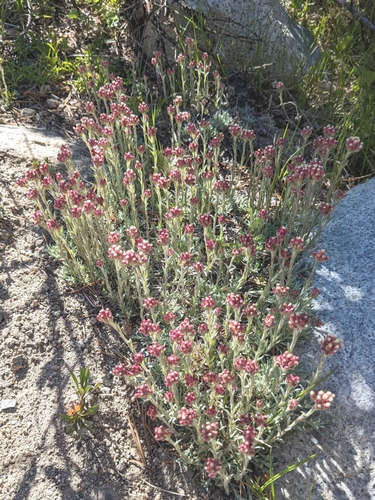
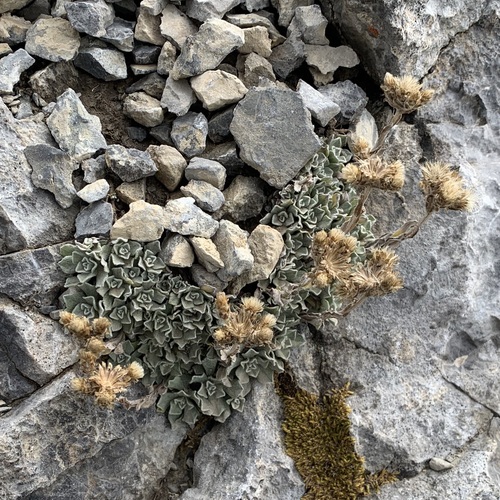
Rosy Pussytoes
Antennaria rosea
Care
part shade
low
0–1ft tall
Resistant
Friendly
Prized
Grasslands and open woodlands of northern and central California from the Sacramento Valley to Tulare County, 500-4000 ft elevation, extending northward.
Care Guide
Planting
Plant rosy pussytoes in part shade with low water availability - it thrives in dry conditions and doesn't need supplemental irrigation once established. Space plants about 12 inches apart to accommodate their spreading habit via short stolons. This native groundcover works well in meadow edges, rocky areas, and dry ridge settings where drainage is excellent and competition from other plants is minimal.
After Planting
Water weekly during your first summer to help the plant establish, then taper off as it becomes drought-tolerant. Rosy pussytoes spreads vegetatively and forms a low basal patch of woolly gray-green leaves (typically 4–16 inches tall), so minimal pruning is needed beyond removing dead growth in spring. The main mistake is overwatering - this plant evolved in dry to alpine habitats and will rot in wet soil, so err on the side of dry once it's past year one.
Endangered & Threatened Species Supported
Alpine habitat specialist; climate change impacts
California Threatened Species Act listing
Listed under California ESA
Wildlife Supported
Birds

Primary forage in alpine and subalpine habitats where pussytoes are abundant
Insects

Early spring forager on low herbaceous plants; pollen source Apr-Jun

Multiple species use Antennaria as pollen source; Mar-Oct activity

Nymphalid butterfly; caterpillars may feed on Antennaria species

Caterpillars feed on Antennaria species; multiple generations Apr-Sep
Specialist bee visiting low-growing montane plants; May-Jul

California subspecies; caterpillars feed on Antennaria spp.

Specialist pollen forager on low-growing herbaceous plants; Apr-Jul

Alpine butterfly with larvae feeding on Antennaria; Jun-Aug flight period
+6 more species