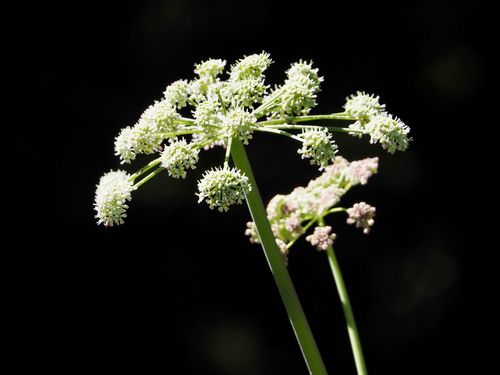
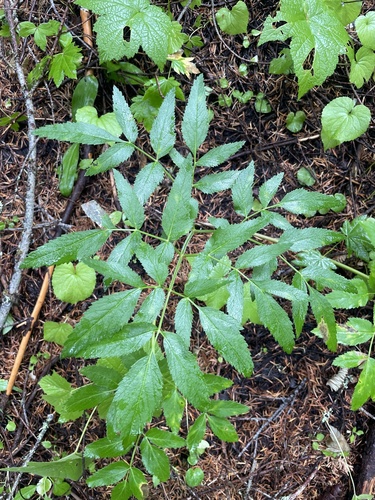
Lyall's angelica
Angelica arguta
Care
full sun, part shade
Prefers loamy or clay soils. Grows poorly in sandy soils.
3–7ft tall
Mar-May
Yes
Root used in traditional food preparation
Coastal bluffs and wetlands from Marin County to Mendocino County, below 500 ft elevation.
Care Guide
Planting
Plant Lyall's angelica in full sun in loamy or clay soil - it will struggle in sandy soils, so amend if needed. This taprooted perennial prefers soil that drains well but retains some moisture. Space plants 2-3 feet apart to accommodate their mature height of 3-7 feet. Plant in fall or early spring to establish before the growing season.
After Planting
Water weekly during your first summer to help the plant establish its deep taproot, then gradually reduce frequency as it matures. Expect blooms in spring (March-May) on tall, hollow stems topped with yellowish flower clusters. Year one is about establishment - the plant may look modest initially but will develop into an impressive 3-7 foot specimen. The biggest mistake is planting in sandy soil or overwatering once established; this is a moderate-care plant that prefers to dry out somewhat between waterings.
Endangered & Threatened Species Supported
Zerene Fritillary; multiple subspecies of concern including S. z. hippolyta (ESA listed 1992)
California species of special concern
Wildlife Supported
Insects
Monophagous specialist on angelica species

Larvae feed on angelica and related umbellifers during development

Specialist pollen collector for nest provisioning

Wood-boring larvae develop in plant stems over multiple years

Larval host plant for multiple generations

Larvae utilize angelica as secondary host plant in some populations