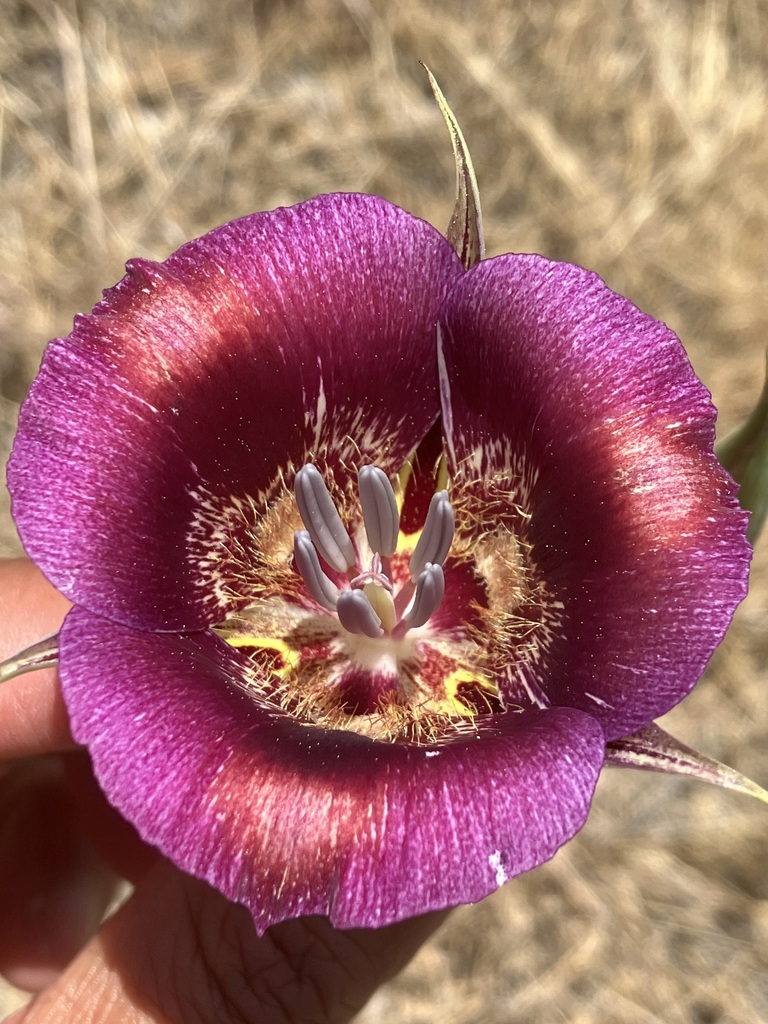
Butterfly Mariposa Lily
Calochortus venustus
Care
full sun, part shade
very low
Fast, Medium, Slow; Tolerates clay but prefers fast draining soil.
0–2ft tall , 0–0ft wide
Mar-May
Deciduous
Friendly
Prized
Bulbs eaten raw or roasted; traditional Indigenous staple food
Grasslands and oak woodlands from the Diablo Range south through the southern Sierra Nevada foothills to Kern County, 500-3000 ft elevation.
Care Guide
Planting
Plant your butterfly mariposa lily in full sun with fast-draining soil - while it tolerates clay, it will perform better in sandy or well-draining conditions. Space bulbs to allow room for the plant's branching stems, which typically reach 1–2 feet tall. Plant in fall or early spring before the growing season begins. For maximum visual impact, plant several bulbs together rather than singly, as they're more striking when massed.
After Planting
Water moderately during the growing season and spring bloom, but here's the critical part: stop watering completely once the plant finishes flowering. This plant requires summer dormancy to thrive, so withholding water after bloom is non-negotiable - it's not neglect, it's what the plant needs. The most common mistake Bay Area gardeners make is continuing to water through summer, which rots the bulb. Once established, never irrigate during summer months.
Visit Calscape for more information about Butterfly Mariposa Lily
Endangered & Threatened Species Supported
Listed under ESA and CESA; endemic to Southern California
California state threatened species
California Species of Special Concern
Wildlife Supported
Insects
Larvae feed on bulb leaves in spring during development
Pollen foraging during peak bloom period
Specialist bee feeding on Calochortus pollen during flowering season
Nectar foraging during flight season
Adult beetle feeding on pollen during bloom
Larval and adult feeding on pollen
Pollen feeding during flowering season
Adult moth visiting flowers for nectar
+2 more species