Bearbind
Calystegia sepium subsp. limnophila
Care
7–13ft tall
Prized
Riparian areas, marshes, and wet areas throughout California from sea level to 6,000 ft elevation, extending to the Pacific Northwest and the Great Plains
Care Guide
Planting
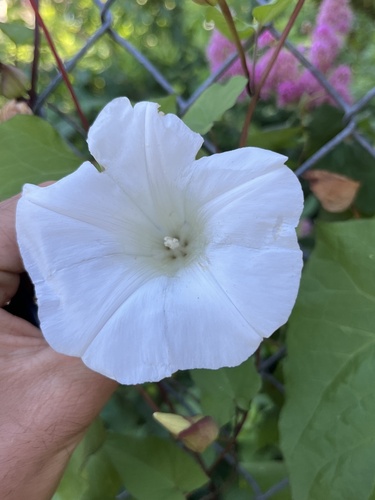
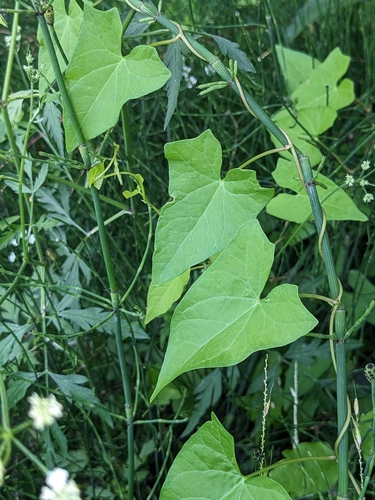
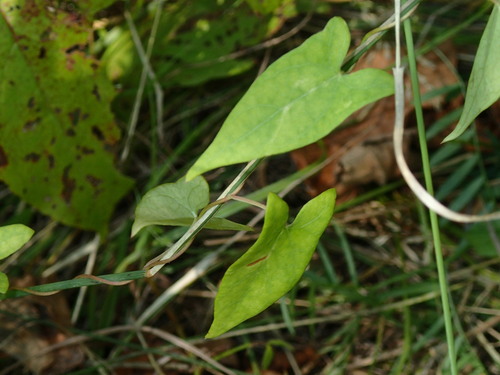
Plant Bearbind where it has something to climb - a trellis, fence, or sturdy shrub - since this twining vine grows 7 to 13 feet tall and needs support to show off its pale green arrowhead-shaped leaves and trumpet flowers. The Calscape data doesn't specify sun or soil requirements for this Bay Area native, so observe your planting spot and adjust if the plant struggles; most bindweeds are adaptable. Space it where you're ready to let it sprawl, since it will enthusiastically twist counter-clockwise around whatever's nearby.
After Planting
Beyond establishment, Bearbind's main demand is a structure to climb on - without support, it will sprawl and become tangled. The data doesn't detail a specific watering schedule after planting or pruning needs, so water during dry spells your first year and watch for signs of stress, then adjust based on how the plant responds. Be aware that bindweeds can spread vigorously; the #1 mistake is planting without a clear containment strategy or a sturdy support system, since an unsupported vine will quickly become unmanageable.
Endangered & Threatened Species Supported
California Species of Special Concern; monarch populations declining
Wildlife Supported
Insects

Visits flowers for nectar during warm months; important food source for migratory populations

Critical nectar source for spring and fall migrations through California; fueling for long-distance movement

Larvae feed on Calystegia foliage; populations vary with plant availability

Sap-feeding pest that colonizes stems and leaves; population source for natural enemies

Visits flowers for nectar throughout warm season; year-round multiple generations in California
Birds

Forages on fallen seeds; consistent seed predator