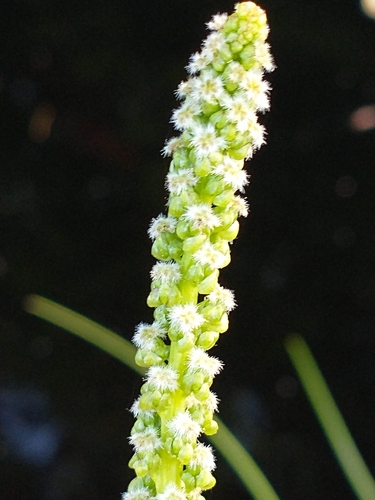
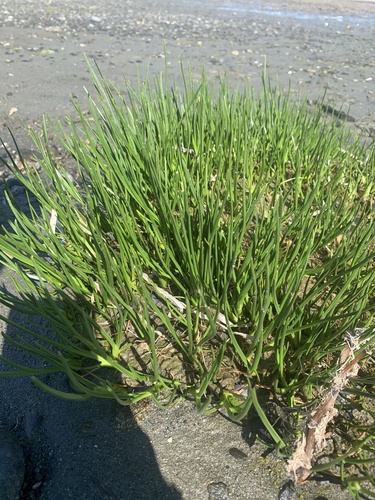
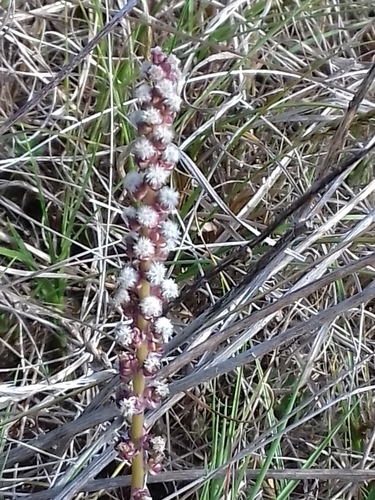
Arrow-grass
Triglochin maritima
Care
full sun
moderate
Standing
0–2ft tall
Mar-Aug
Friendly
Coastal salt marshes and alkali wetlands throughout California, typically below 2,000 ft elevation, extending to British Columbia and Mexico
Care Guide
Planting
Plant Arrow-grass in full sun in a location that stays consistently wet or even has standing water - this is a marsh plant, so boggy conditions are ideal, not a bug. Space plants about 12 inches apart since they can spread via stolons. Spring is your best planting window. Unlike most Bay Area plants, Arrow-grass actually thrives in poor drainage, so don't amend your soil trying to improve it.
After Planting
Water deeply and keep the soil wet throughout the growing season (spring through summer); this plant won't tolerate drying out. Arrow-grass flowers from March through August, and you can deadhead spent flower spikes if you want a tidier look, though it's not necessary. The biggest mistake Bay Area gardeners make is treating this like a typical perennial - it needs consistent moisture year-round and will decline or die if planted in regular garden beds. Think of it as a water garden plant first.
Endangered & Threatened Species Supported
Yellow Rail; California state threatened species
Wildlife Supported
Birds

Winter resident in coastal bays and marshes; primary forage in eelgrass beds and salt marshes, Dec-Feb

Critical fall migration staging resource in coastal marshes, Sep-Nov

Winter waterfowl in coastal salt marshes, Nov-Mar

Rare migrant through coastal marshes; uses emergent vegetation cover and forages on marsh plants
Insects

Larvae feed on marsh vegetation; adult moths present Jun-Sep
Fungal specialist on Triglochin maritima; forms disease relationship year-round

Sap-feeding herbivore common in salt marshes and coastal wetlands
Larval miner in plant tissues, common in wet habitats Apr-Jun

Herbivorous beetle feeding on emergent marsh vegetation, Jun-Aug

Sap-feeding insect on marsh plants, primary activity Apr-Jun