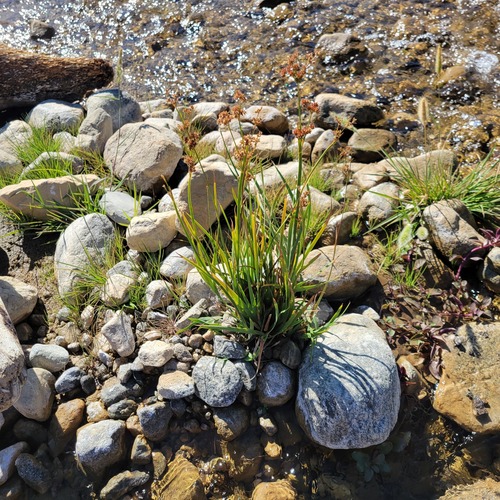
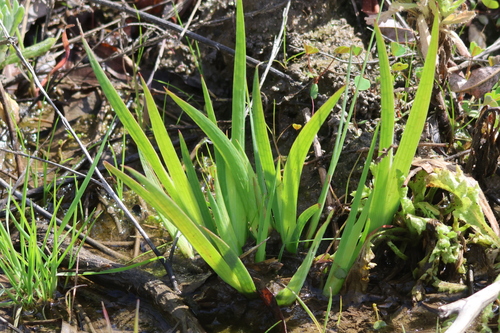
Irisleaf Rush
Juncus xiphioides
Care
part shade
moderate
Fast, Medium, Slow; Adaptable.
1–3ft tall , 1–6ft wide
Mar-Aug
Evergreen
Friendly
Mountain meadows and riparian areas in the Sierra Nevada, Cascade Range, and interior mountains, typically at 4,000-10,000 ft elevation, extending to Oregon and Nevada
Care Guide
Planting
Plant irisleaf rush in partial shade where it can stay consistently moist - it thrives in wet habitats and wet areas, so a spot near a water feature or in a low area that holds moisture is ideal. This plant is adaptable to fast, medium, or slow-draining soil, so drainage flexibility gives you options; the key is keeping water available rather than worrying about perfect drainage. Plant in spring for best establishment, spacing plants about 1 to 2 feet apart since they'll spread via rhizomes.
After Planting
Water weekly throughout your first summer to keep the soil moist as your plant gets established; irisleaf rush is not drought-tolerant and should never fully dry out. Once established, continue to keep the soil moist during summer months - this isn't a plant you can neglect in the dry season. The biggest mistake Bay Area gardeners make is underwatering: this is a water-loving native that needs consistent moisture, not the dry-summer treatment you'd give most California natives. You can expect flowers from March through August, and since this is an evergreen perennial, it will provide structure year-round.
Wildlife Supported
Birds

nests woven among rush stems March-July; dependent on dense Juncus stands
forages in and around rush beds; uses as shelter and nesting substrate

forages for insects among rush vegetation; uses wetland Juncus stands for insect hunting
Insects

sap-feeding hemipteran utilizing Juncus xiphioides as primary host plant