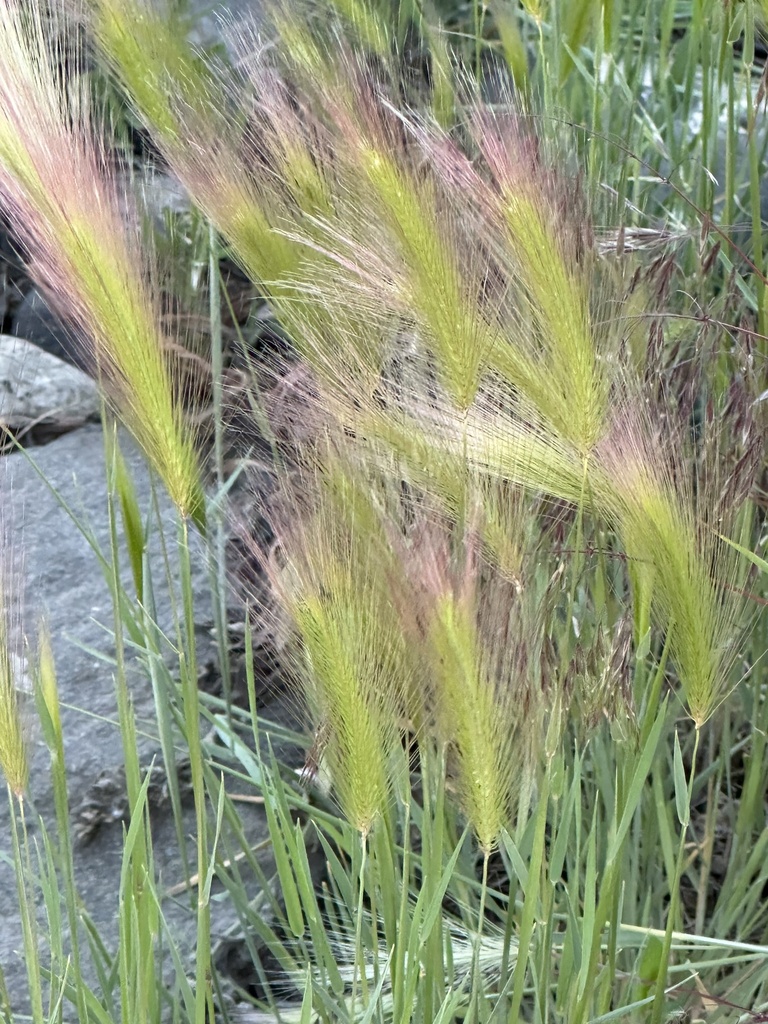
Foxtail Barley
Hordeum jubatum subsp. jubatum
Care
full sun
moderate
2–2ft tall
Friendly
Meadows, riparian areas, and disturbed sites in the Sierra Nevada and interior California, typically at 2,000-8,000 ft elevation, extending to British Columbia and the Great Plains
Care Guide
Planting
Plant foxtail barley in full sun in fall or spring. It's remarkably unfussy about soil - it tolerates everything from loamy to clay, and even thrives in saline soils where other plants struggle. Space plants about 12-18 inches apart and don't worry about drainage perfection; this grass handles wet sites just as easily as dry ones, though it's most commonly found in moist areas.
After Planting
Water moderately during establishment and through your first growing season, then back off - foxtail barley is drought-tolerant once established and doesn't need babying. The plant is primarily grown for its ornamental seedheads, so let them mature on the plant for the silvery-green "foxtail" effect, then cut them back when they fade. This is a vigorous pioneer grass that can self-seed readily, so if you want to prevent volunteer seedlings next year, deadhead the flower clusters before they fully dry.
Wildlife Supported
Birds
Primary forage grass; seeds and shoots consumed throughout year
Critical staging habitat during fall migration Sep-Nov; grazes shoots and tubers
Winter seed consumption in grassland habitats
Winter seed foraging in California deserts and grasslands
Insects
Primary host for fungal pathogen; overwinters on living tissue
Spring-summer population on emerging shoots; vector for barley yellow dwarf virus
Larval host plant; overwinter larvae feed on spring growth
Larval and adult leaf feeding spring through early summer
Larval host in multi-generational populations; tunneling damage to culms
Mid-summer phloem feeding on developing inflorescences
Pollen and predatory feeding on stem-boring insects during flowering period