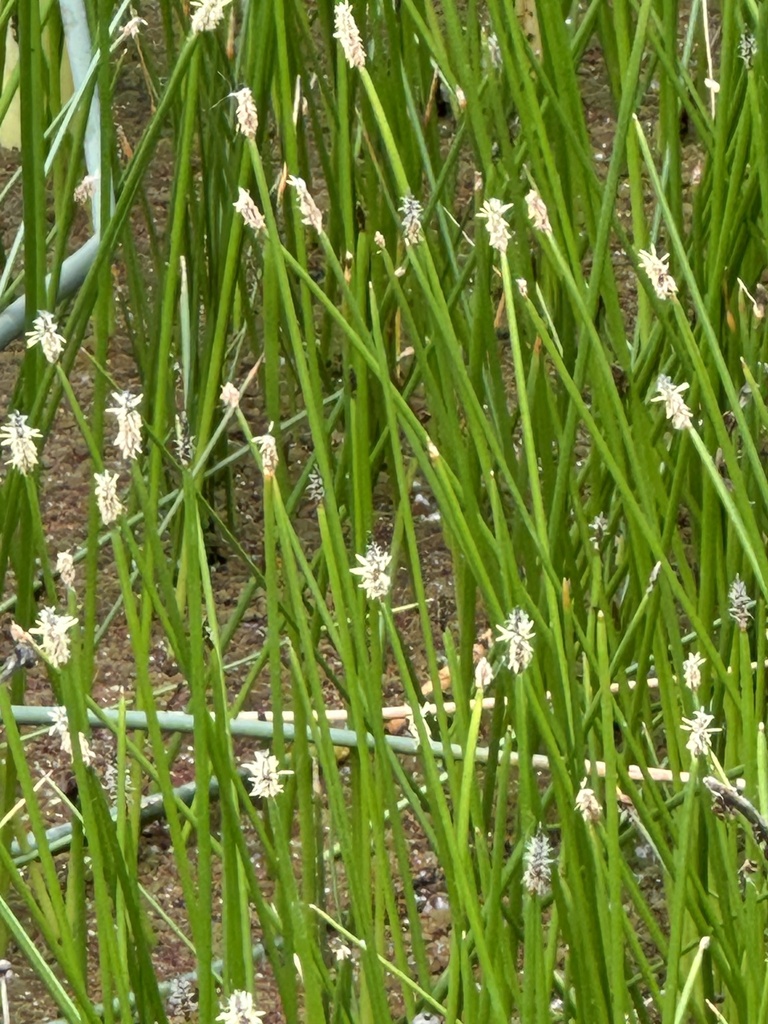
Creeping Spikerush
Eleocharis macrostachya
Care
full sun
high
Slow, Standing; Tolerates any saturated or inundated soil.
2–3ft tall
Evergreen
Friendly
Tubers eaten raw or cooked; traditional Indigenous food
Marshes, wet meadows, and seasonal wetlands throughout California from sea level to 6,000 ft elevation
Care Guide
Planting
Plant Creeping Spikerush in full sun in soil that stays consistently wet or even saturated - think pond edges, rain gardens, or areas with poor drainage where other plants struggle. The Bay Area's winter rains make this an ideal time to plant (November through March), so the plant can establish roots while moisture is naturally high. This evergreen sedge spreads via rhizomes, so give it room to expand if you want it to fill an area, or plant it in a contained spot if you prefer to contain its growth.
After Planting
Keep the soil moist to saturated year-round; this is not a plant to let dry out. Once established, you shouldn't need to wean it off supplemental water since it thrives in consistently wet conditions - in fact, during Bay Area summers, plan to water regularly to maintain that moisture. The #1 mistake is treating it like a typical California plant and letting it dry between waterings; Creeping Spikerush needs boggy conditions to thrive. It tolerates cold down to -10°F, so it will handle Bay Area winters without issue.
Visit Calscape for more information about Creeping Spikerush
Endangered & Threatened Species Supported
California Threatened species
California Species of Special Concern
Wildlife Supported
Birds
grazes on Eleocharis shoots in shallow water; important winter food resource in California wetlands
migration staging in California wetlands; seeds and vegetative matter important during spring and fall passage
forages in shallow marshes for seeds and invertebrates associated with Eleocharis beds
dabbling duck consuming seeds from Eleocharis in shallow wetlands during migration and overwintering
Insects
larvae colonize submerged Eleocharis stems; important macroinvertebrate component of marsh food webs
herbivory on emergent and submergent plant material
feeds on Eleocharis stems and culms in shallow water habitats