← Back to results

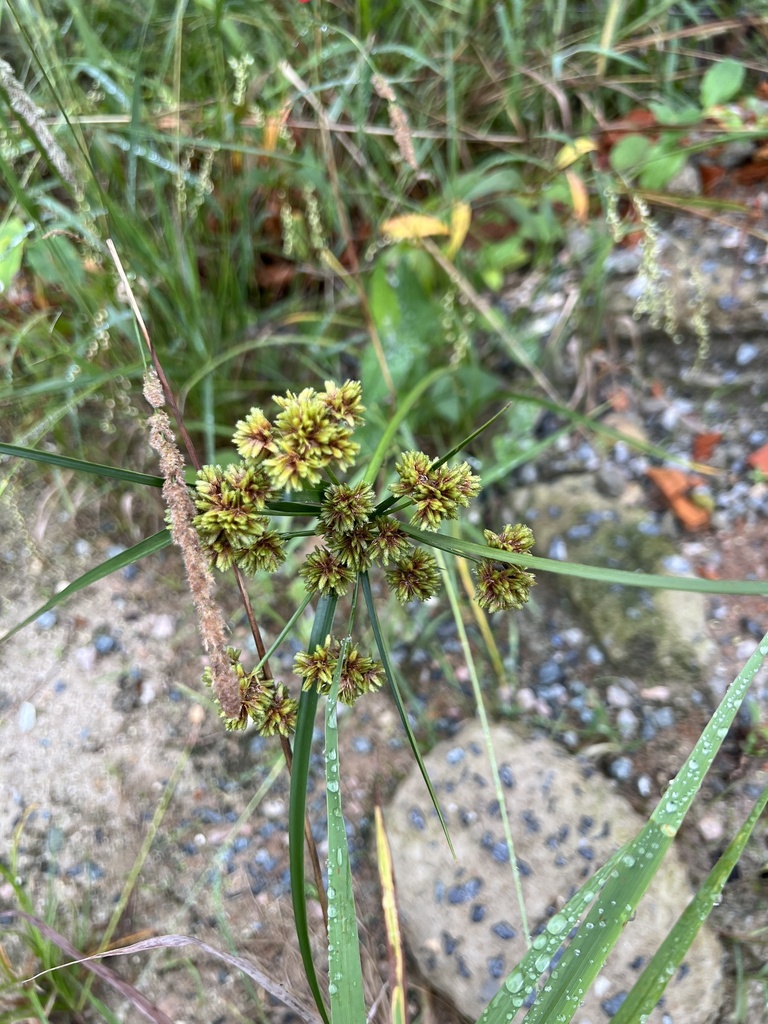
Pale Galingale

Cyperus eragrostis

Care

Sun

full sun

Water

high

Soil

Standing; Tolerates a variety of soils.

Size

3–3ft tall , 30–30ft wide

Bloom

Mar-Nov

Foliage

Evergreen

Container

Friendly

Edible

Tubers eaten cooked; traditional Indigenous food source

Native Range

Disturbed wetlands, ditches, and riparian areas throughout California from sea level to 5,000 ft elevation, native to southeastern U.S. but established in California

Care Guide

Planting

Plant Pale Galingale in full sun in a location where it can stay consistently moist or even wet - it thrives in standing water and wetland conditions, making it perfect for rain gardens, pond edges, or boggy spots in your yard. It tolerates a variety of soils and cold down to 15°F, so it's well-suited to the Bay Area. Plant in spring for best establishment, spacing plants about 2–3 feet apart given their mature height of 3 feet.

After Planting

Water regularly to keep the soil moist throughout the first growing season; unlike most plants, this sedge actually prefers wet conditions, so err on the side of too much water rather than too little. Once established, Pale Galingale is evergreen and requires minimal maintenance - no pruning is needed. The #1 mistake Bay Area gardeners make is treating this like a typical ornamental and letting it dry out; remember it's a wetland plant that wants moisture year-round.

Visit Calscape for more information about Pale Galingale

Wildlife Supported

Birds

Foliage · Fall

Critical fall migration fuel source, September-November during Pacific Flyway migration

Seeds · Fall

Fall and winter staging areas in California wetlands, September-March

Seeds · Winter

Winter resident in California freshwater marshes and wetlands, November-March

Insects

Foliage · Summer

Larval host plant, caterpillars feed on grass foliage, May-September

Foliage · Spring

Spring colonization of sedges and grasses, vector for plant viruses

Foliage · Summer

Aquatic/semi-aquatic beetle larvae feed on sedge roots and shoots, June-August

Larval Host · Spring

Larval host for this rare California moth species

Where to Buy

Native Here Nursery

101 Golf Course Dr, Tilden Regional Park, Berkeley

Sat 10am-2pm

3.0 mi (510) 549-0211 Website