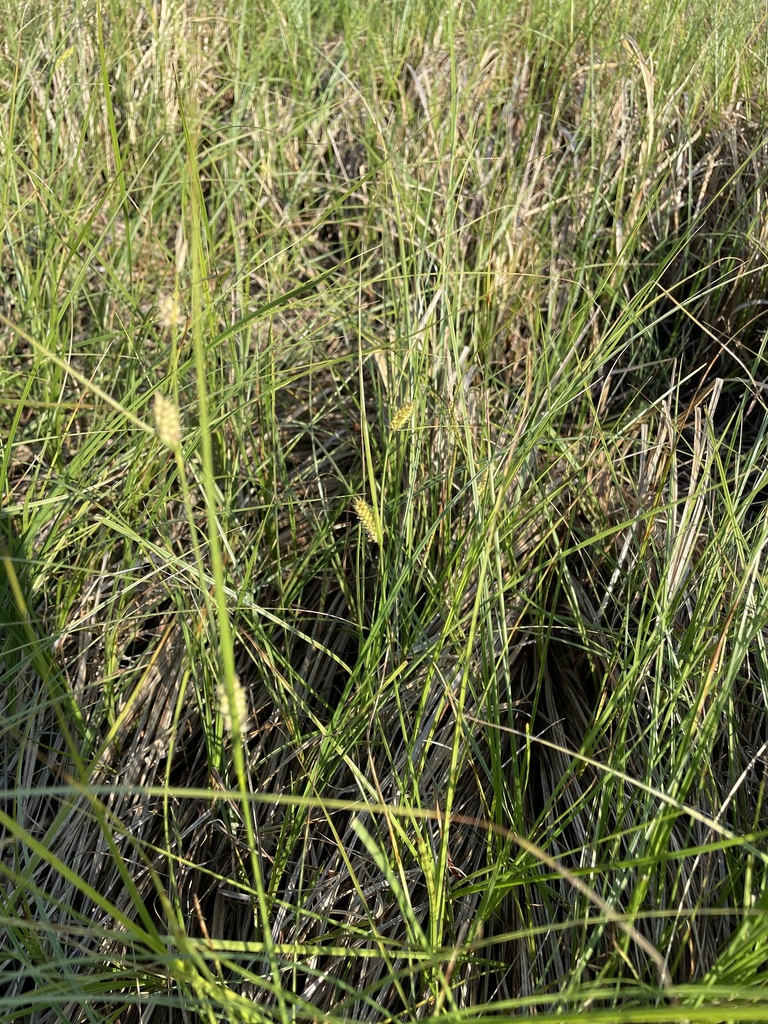
Woolly Sedge
Carex pellita
Care
full sun
Standing
1–3ft tall
Friendly
Tubers eaten cooked; traditional Indigenous food source
Wetlands, riparian areas, and disturbed sites throughout California from sea level to 8,000 ft elevation, extending to British Columbia and the Great Plains
Care Guide
Planting
Plant woolly sedge in full sun in soil with standing water or very wet conditions - think ditches, marshes, or the boggy low spot in your yard where nothing else thrives. Space plants about 1 to 2 feet apart since they spread via rhizomes and will eventually fill in. Fall or early spring planting gives the plant time to establish before summer.
After Planting
Water deeply after planting, but honestly, this sedge wants consistently wet soil, so you may never need to stop watering - it's happier staying moist than drying out. Expect it to grow into a 1- to 3-foot clump of stems; you can leave it alone or cut it back in late winter if it gets too sprawling. The biggest mistake is planting it in regular garden soil and trying to let it dry out between waterings - woolly sedge isn't a drought plant, and it will sulk or die if you do.
Endangered & Threatened Species Supported
Alkali marsh sedge - California endemic
Wildlife Supported
Birds
Seeds consumed during fall migration and winter; important carbohydrate source
Insects
Fungal leaf pathogen; active during cool, wet spring conditions Mar-May
Ustilaginous infection of reproductive structures; peak Jul-Aug
Rust fungus with spring aecial stage on Carex; inoculum source for alternate hosts
Mammals
Early growing shoots grazed by mule deer and elk in marsh-adjacent riparian zones