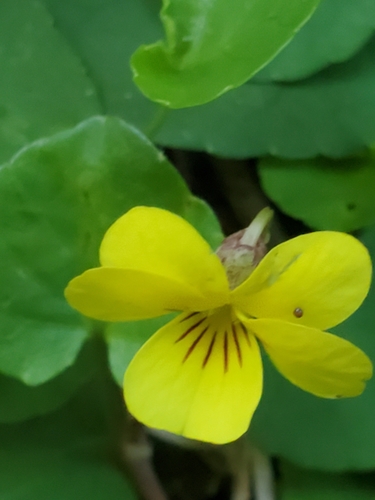
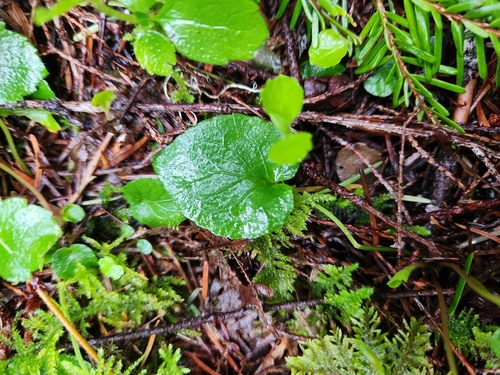
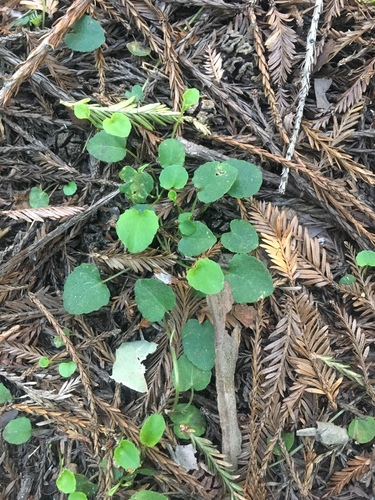
Evergreen Violet
Viola sempervirens
Care
part shade
low
0–0ft tall
Jan-Dec
Evergreen
Friendly
Prized
Flowers and leaves eaten raw or cooked; petals used in salads
Moist forests and riparian areas of coastal northern California from Mendocino County north, below 2000 ft elevation, extending to Oregon.
Care Guide
Planting
Plant your Evergreen Violet in partial shade to deep shade - it thrives in the dappled light under trees, making it perfect for those tough shady corners of your Bay Area garden. Space plants about 6 inches apart if you're using them as a groundcover or lawn alternative, and plant in fall or winter when the soil is moist and the plant can establish before summer. The data doesn't specify soil type, so amend with compost if your native soil is compacted, and ensure the area drains well since even low-water plants need to avoid sitting in wet soil.
After Planting
Water weekly during your first summer to help the plant establish, then gradually reduce watering as it matures - Evergreen Violet needs only low to moderate water once established, so by year two you should rarely need to supplement rainfall in the Bay Area. This is an evergreen groundcover that blooms winter through spring, so you'll see flowers when other plants are dormant; no pruning is necessary, though you can trim back any straggly growth in late spring. The most common mistake is overwatering - remember this plant is native to our foggy redwood and mixed evergreen forests, so it prefers cool, moist air and well-draining soil over frequent irrigation.
Endangered & Threatened Species Supported
California Species of Special Concern
California Species of Special Concern
Wildlife Supported
Insects

Multiple lepidopteran species utilize violets as larval host plants
Ants disperse violet seeds via myrmecochory; seeds collected for colony storage

Larvae feed on violet foliage in early spring after overwintering

Early instar larvae utilize violet leaves as primary host plant food source

Larvae feed on violet foliage during larval development stage