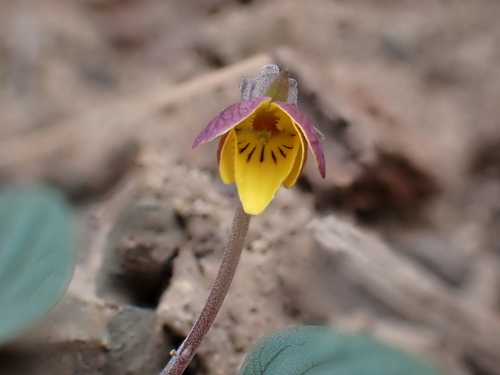
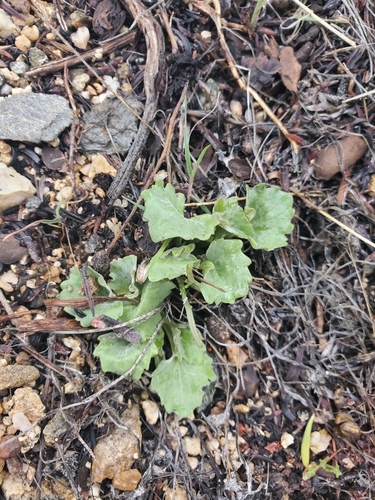
Goose-foot Yellow Violet
Viola purpurea subsp. quercetorum
Care
full sun, part shade
1–1ft tall
Resistant
Friendly
Prized
Flowers and leaves eaten raw or cooked; petals used in salads
Oak woodlands and chaparral of the Sierra Nevada foothills and adjacent ranges, 2000-5000 ft elevation.
Care Guide
Planting
Plant your Goose-foot Yellow Violet in full sun to part shade - it thrives in the bright conditions of Bay Area chaparral and foothills. Space it about 1 foot from neighboring plants, since mature plants stay small and compact. Plant in fall or early spring to give the roots time to establish before summer heat arrives.
After Planting
Water weekly during your first summer to help the plant settle in, then gradually reduce watering as it becomes established - this violet evolved in low-elevation mountains where moisture is seasonal. The biggest mistake is overwatering once established; these plants prefer drier conditions typical of their native habitat. You can expect thick, fleshy leaves (some with purplish tints) and cheerful yellow flowers with purple veining, and the plant is tough enough to resist hungry deer.
Visit Calscape for more information about Goose-foot Yellow Violet
Endangered & Threatened Species Supported
Zerene Fritillary; multiple subspecies of concern including S. z. hippolyta (ESA listed 1992)
California state listed as Threatened; Species of Special Concern
California Species of Special Concern
Wildlife Supported
Insects

Larvae feed on violet leaves in spring, critical early season host plant for California populations

Primary violet host for larvae in California oak communities

Host plant for larval development in oak woodland habitats

Host plant for early season larval development

Larval foodplant in montane and foothill oak woodlands

Host plant for high elevation populations

Larval host in oak-dominated habitats

Specialist bee visiting violet flowers for pollen resources
+3 more species