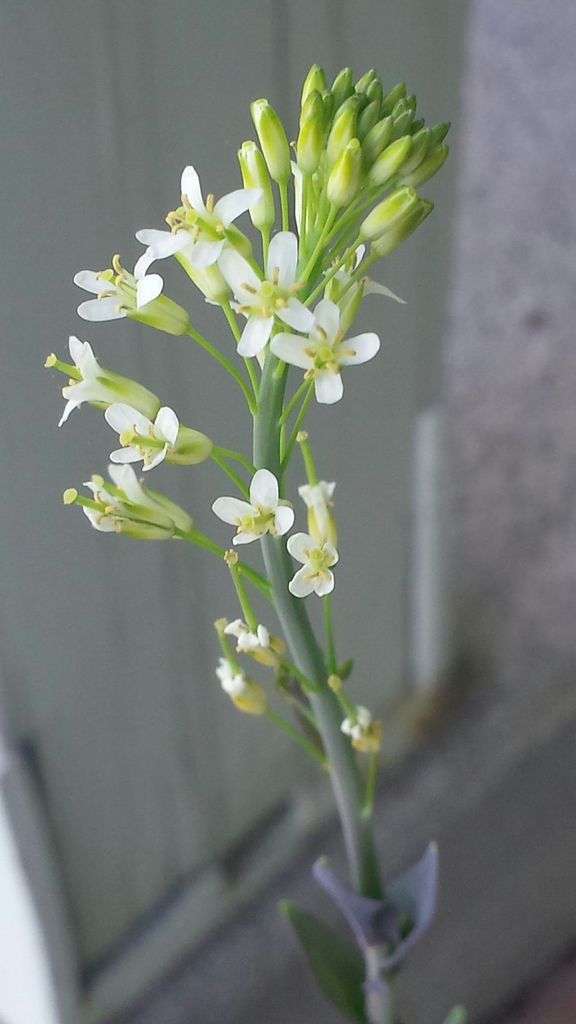
Tower Mustard
Turritis glabra
Care
full sun, part shade
Friendly
Disturbed areas, grasslands, and oak woodlands throughout much of California, extending from the coast to the mountains and into many western states.
Care Guide
Planting
Plant tower mustard in full sun, where it will thrive in poor, well-draining soil - chalky or sandy soils are ideal. This plant prefers open situations, so give it space and avoid crowding it with other plants. The data doesn't specify the best planting season for the Bay Area, so check with a local nursery for timing.
After Planting
Water needs for tower mustard are not documented, so monitor the soil moisture during your first season and adjust based on how the plant responds. This is a slim, upright plant with a natural architectural form, so minimal pruning should be necessary. Watch for signs of stress in its first year as it establishes - the main risk is overwatering in our climate, given its preference for poor, dry soils.
Wildlife Supported
Insects
Pathogenic oomycete; obligate parasite of Turritis glabra
Oomycete pathogen establishing systemic infection on crucifer hosts
California native butterfly; larvae specialize on Brassicaceae plants
Multiple generations use crucifer plants as larval host plants throughout growing season
Western North American species; crucifer-dependent larval host plant
Attacks developing seed pods during reproductive season
Early spring emergence; larvae feed on Brassicaceae family plants
Birds
Non-native; seed predation during winter months
Mammals
Herbivorous browsing on crucifer foliage when available