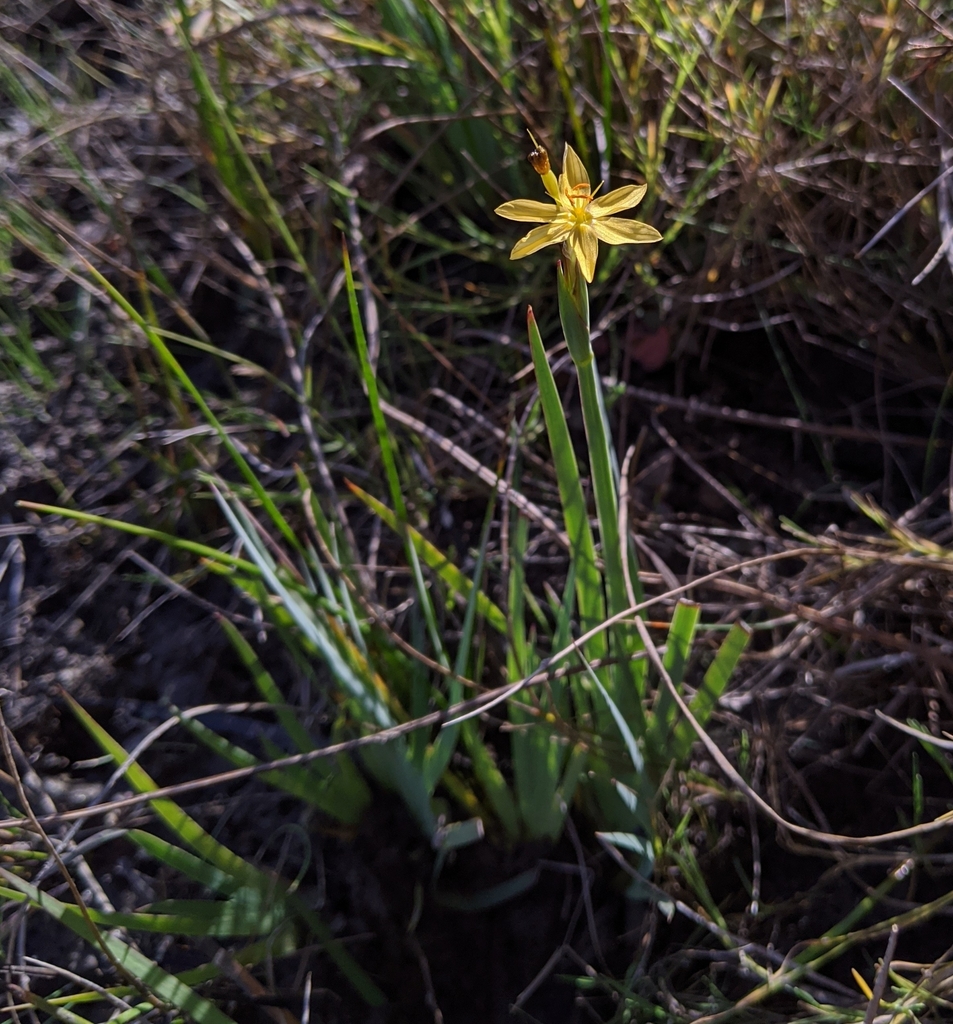
Yellow-eyed-grass
Sisyrinchium californicum
Care
full sun, part shade
moderate
Fast, Medium, Slow; Tolerates sandy or clay soils. Tolerates sodic soil..
0–1ft tall , 0–0ft wide
Resistant
Friendly
Prized
Moist grasslands, wetland margins, and seepage areas throughout coastal California, below 2000 ft elevation.
Care Guide
Planting
Plant Yellow-eyed Grass in full sun if you're on the coast, or part shade if you're inland in the Bay Area. It tolerates a wide range of soils - sandy, clay, or anything in between - so don't stress about soil prep, though it does prefer moist conditions. Space plants about 1 foot apart since they form small clumps. Plant in spring or fall for best establishment.
After Planting
Water weekly during your first summer to help it establish; once mature, you can cut back to watering just once a week in summer. The plant naturally prefers moist environments, so don't let it completely dry out, especially during bloom season (May through June). Year 1 focus is on consistent moisture - after that, it becomes an easy-care perennial that may even self-sow if conditions suit it. The #1 mistake is underwatering: this plant isn't drought-tolerant, so treat it like a meadow plant that likes regular moisture, not a xeric native.
Endangered & Threatened Species Supported
Listed under federal ESA and CESA; Critical habitat designated; amphibian chytrid fungus threat
Wildlife Supported
Birds
Nesting habitat in grassland wetlands during breeding season
Gleans insects from foliage in California wetlands and riparian areas
Spring arrival; insects gleaned from flowering vegetation during migration and breeding
Amphibians
Shelter and insect foraging habitat in vernal pools and wetlands
Insects
Early season pollen source for adult nutrition and egg-laying females