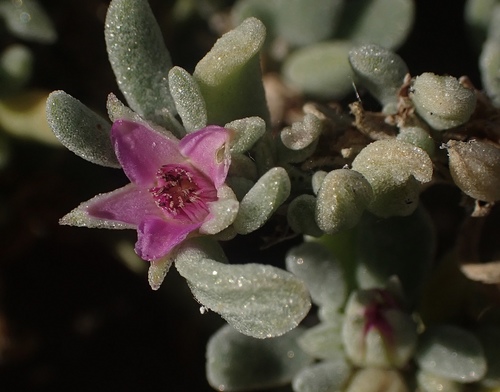
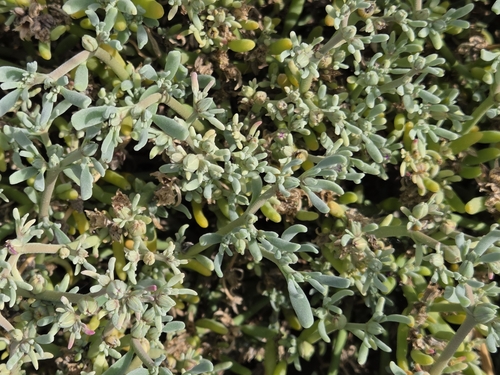
Sea Purslane
Sesuvium verrucosum
Care
full sun, part shade
very low
sandy, well-draining, saline tolerant
0–0ft tall , 1–2ft wide
Jun-Oct
Evergreen
Resistant
Friendly
Succulent stems and leaves eaten raw or cooked; salty vegetable
Coastal salt marshes and sandy areas of California from San Francisco Bay south to San Diego County, below 50 ft elevation.
Care Guide
Planting
Plant sea-purslane in full sun to part shade in sandy, well-draining soil - it thrives in saline conditions, so don't amend your soil if it's naturally salty or alkaline. Space plants about two feet apart since they spread into mats up to two meters wide. Plant in spring or early summer to give it time to establish before cooler months.
After Planting
Water very lightly during the first summer to help establishment, then taper off to minimal water once it's rooted - this plant evolved in coastal salt marshes and desert washes, so it actually prefers neglect to overwatering. The biggest mistake is watering too much or too often; let the soil dry between waterings. Expect year-round evergreen foliage with bright pink-orange flowers from June through October, and prune only to control its sprawling growth if needed.
Endangered & Threatened Species Supported
Western Pygmy Blue butterfly; California species of special concern
Wildlife Supported
Insects

Multiple generations utilize as larval food plant in warm months

Multiple generations utilize nectar source

Occasional nectar use during migration and breeding

Larval development on host plant during breeding season
Phloem feeding on plant tissues