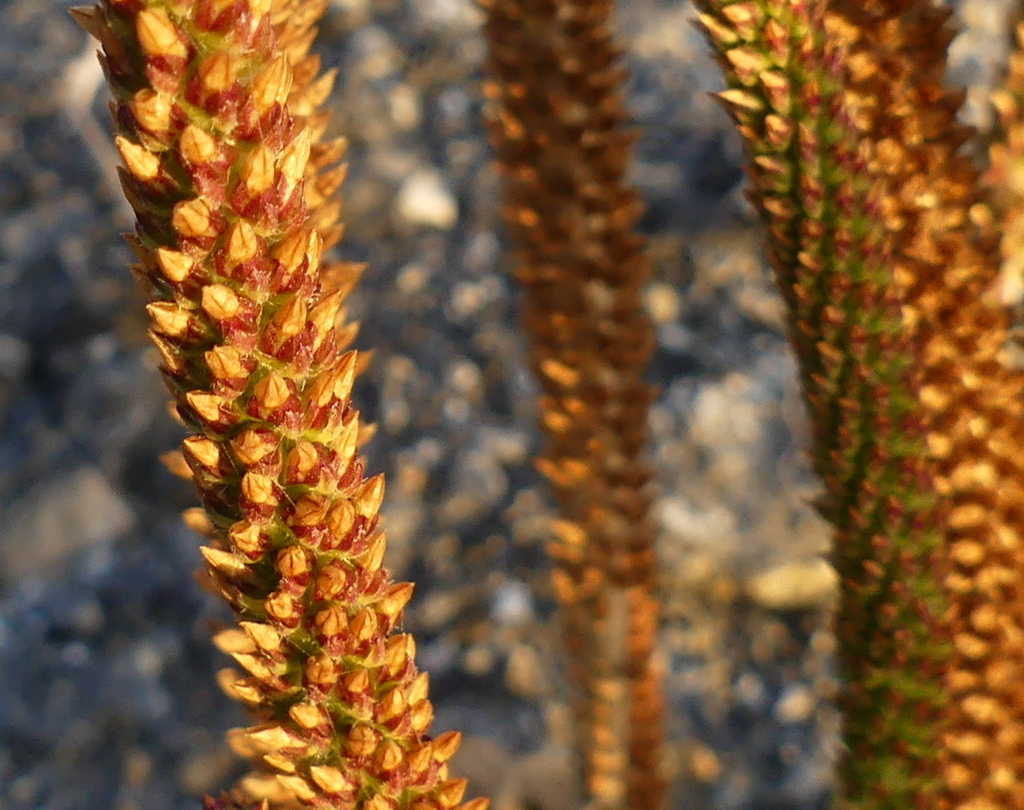
Tall Coastal Plantain
Plantago subnuda
Care
full sun
low
Fast, Medium, Slow; Adaptable.
2–2ft tall
Mar-Aug
Resistant
Friendly
Coastal bluffs, grasslands, and scrub from Mendocino County to San Luis Obispo County, below 1000 ft elevation.
Care Guide
Planting
Plant tall coastal plantain in full sun with well-draining soil - it's highly adaptable and will tolerate fast, medium, or slow drainage. This native perennial thrives in the Bay Area's coastal conditions and can handle wet or moist sites, so don't worry if your garden retains some moisture. Spring is an ideal planting time to give it the growing season to establish.
After Planting
Water regularly during your first summer to help it establish, then transition to low water once it's settled in - this native is drought-tolerant once mature. Expect it to reach about 2 feet tall with flowering spikes from March through August. The main mistake Bay Area gardeners make is overwatering established plants; remember this species naturally grows in coastal marshes and wet places, so it's tougher than it looks and doesn't need constant attention.
Visit Calscape for more information about Tall Coastal Plantain
Endangered & Threatened Species Supported
California Endangered Species Act listing
Some fence lizard species are California Species of Special Concern
Wildlife Supported
Mammals
Primary forage plant in arid regions where Plantago subnuda occurs
Seeds collected and cached for winter stores
Birds
Seeds consumed during breeding season; plant provides nesting cover
Insects
Desert grasshopper grazes on plantain foliage during growing season
Reptiles
Uses plant base for thermoregulation and predator avoidance
Low-growing rosette structure provides microhabitat refugium
Uses dense basal rosette for shade and refuge in desert habitat