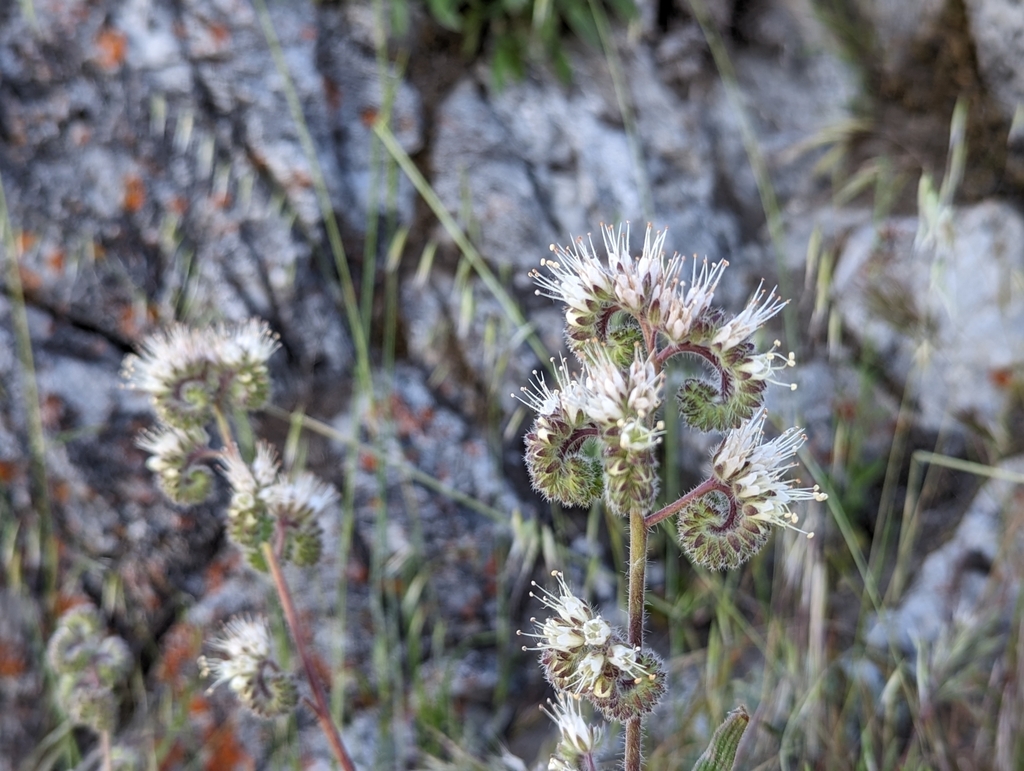
Imbricate Phacelia
Phacelia imbricata var. imbricata
Care
full sun, part shade
low
well-draining, sandy or gravelly soil
1–2ft tall , 1–2ft wide
Apr-Jun
Deciduous
Resistant
Friendly
Prized
Desert and semi-arid areas of northeastern California and the inland mountains from Inyo County to Modoc County, 3000-7000 ft elevation, extending to Oregon and Nevada.
Care Guide
Planting
Plant Imbricate Phacelia in full sun with well-draining soil - it tolerates both sandy and clay soils, so drainage matters more than soil type. Space plants to accommodate their mature size of 1 to 2.5 feet tall. Plant in fall or early winter to take advantage of the natural rainy season, which supports establishment before the dry months arrive. This native perennial is almost always grown from seed, so check that you're starting with seed rather than a nursery plant.
After Planting
Water regularly during the first growing season, then cut back dramatically once established - by summer of year two, you should only need to water once a month or less. Stop supplemental watering altogether in winter and early spring when this plant naturally flowers (April through June). The #1 mistake is overwatering: this is a low-water native that actually prefers neglect once established, so err on the side of dry rather than wet. Expect the plant to be deciduous and go dormant in summer heat, which is completely normal.
Visit Calscape for more information about Imbricate Phacelia
Endangered & Threatened Species Supported
Some subspecies federally protected; species has state endangered designation
Wildlife Supported
Insects
Key host plant for larval development in California populations
Multi-brooded species uses Phacelia as nectar source across season
Adult provisioning wasp forages for nectar
Adult provisioning wasp uses flowers for nectar