← Back to results

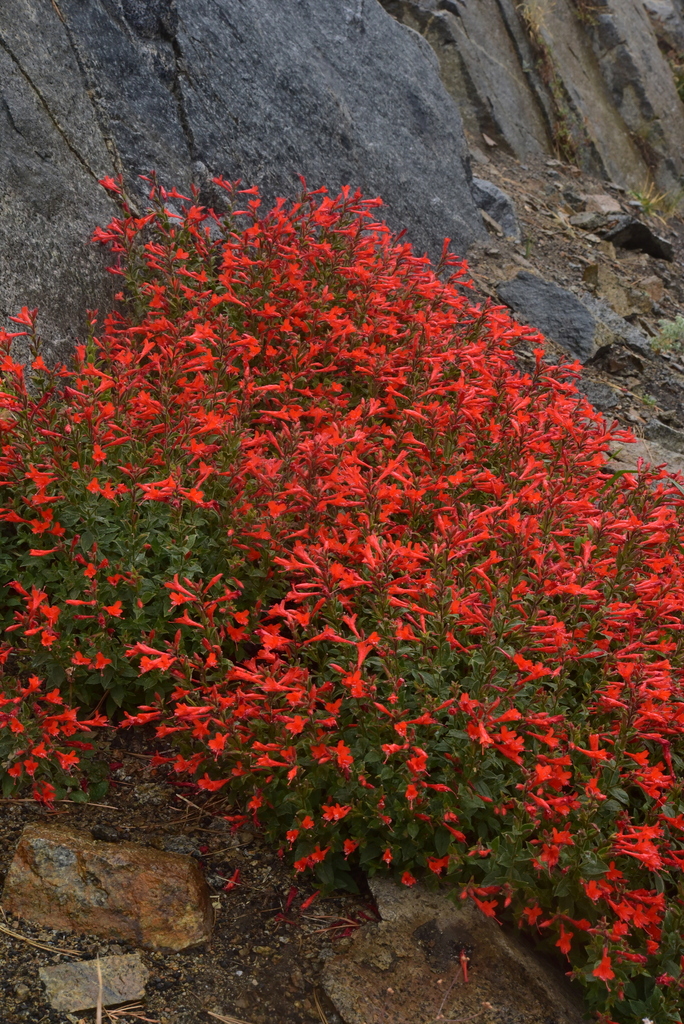
California Fuchsia

Epilobium canum

perennial herb View on Calscape

Care

Sun

full sun

Water

very low

Soil

well-drained; rocky or sandy; very drought tolerant

Size

0–2ft tall , 1–3ft wide

Bloom

Aug-Nov · scarlet red

Foliage

Semi-Deciduous

Deer

Resistant

Container

Friendly

Flowers

Prized

Native Range

Throughout California in dry rocky habitats

Brilliant scarlet tubular flowers beloved by hummingbirds

Late summer/fall color when little else blooms; many cultivars; spreading

Care Guide

Planting

Plant California Fuchsia in full sun for the most flowers. It tolerates clay, sand, and even serpentine soil as long as drainage is decent - it's not fussy about soil type. Plant in fall or winter when the plant is dormant, and space plants 1-2 feet apart depending on whether you want them to fill in as a groundcover. If you're in the Bay Area's wetter coastal areas, your new plant will need almost no supplemental water once established, but if you're inland or in a drier microclimate, plan to water it about once a month through summer.

After Planting

Water your new plant regularly during its first growing season to establish roots, then taper off to once-monthly summer watering (or none at all if you're near the coast). Expect the plant to die back and go dormant in winter - this is normal. The most important thing you can do is cut the plant back to the ground as soon as flowering stops in late fall, before it gets straggly; this ensures it returns thick and healthy in spring. If you skip this step, the plant will look weak next year and may not survive. Once established, California Fuchsia will self-seed freely, so you may find baby plants popping up around your garden.

Visit Calscape for more information about California Fuchsia

Wildlife Supported

Birds

Nectar · Fall

Critical late-season nectar source Aug-Nov for pre-migration fuel; supports southbound migration

Nectar · Fall

Late-season nectar resource during breeding season extension Aug-Nov

Nectar · Fall

Late-season nectar during migration staging in mountain/foothill regions

Nectar · Fall

Desert and coastal populations utilize fall blooms for energy reserves

Larval Host · Summer

Host plant for lepidopteran parasites; southwestern Arizona/California range

Seeds · Fall

Seeds consumed late-season; supports winter population persistence

Insects

Nectar · Fall

Late-season adult nectar source during fall generation

Larval Host · Summer

Specialist gall midge; larvae develop within plant tissues

Larval Host · Summer

Specialist larval host plant; leaf miner on Epilobium species

Nectar · Fall

Crepuscular/nocturnal nectar feeder; supports energy for migration

Where to Buy

Oaktown Native Plant Nursery

702 Channing Way, Berkeley

Wed-Sun 10am-5pm

1.0 mi (510) 387-9744 Website
East Bay Wilds

2110 Eighth St, Suite 202, Berkeley

Fri 9:30am-4pm (occasional Sat, call ahead)

1.5 mi (510) 409-5858 Website
Native Here Nursery

101 Golf Course Dr, Tilden Regional Park, Berkeley

Sat 10am-2pm

3.0 mi (510) 549-0211 Website
Watershed Nursery

601A Canal Blvd, Richmond

Tue-Sun 10am-4pm

5.0 mi (510) 234-2222 Website
Curious Flora

12040 San Pablo Ave, Richmond

Daily 9am-4pm

7.0 mi (510) 215-3301 Website
Yerba Buena Nursery

12511 San Mateo Rd, Half Moon Bay

Tue-Sat 9am-4pm

12.0 mi (650) 851-1668 Website