Hummingbird Sage
Salvia spathacea
Care
part shade, full shade
low
well-drained; tolerates clay and dry shade
1–3ft tall , 2–4ft wide
Mar-May · magenta, pink
Evergreen
Resistant
Friendly
Yes
Prized
Central and Southern California Coast Ranges
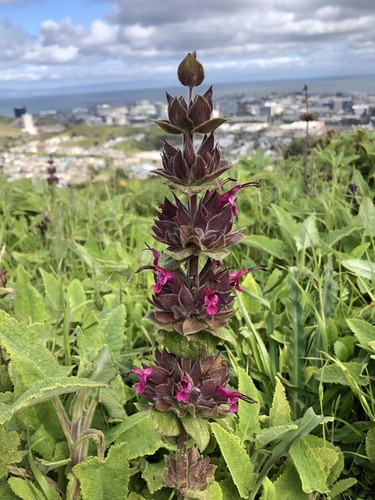
Whorled spikes of large tubular magenta flowers
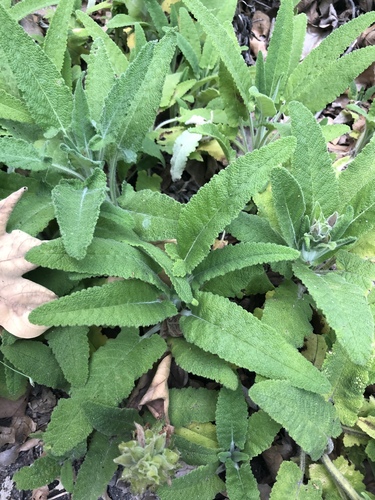
Spreads by stolons; excellent dry shade groundcover; fragrant foliage
Care Guide
Planting
Plant Hummingbird Sage in part shade or full shade - it thrives under trees and large shrubs and actually prefers shade to full sun. It tolerates a variety of soils including clay and dry shade, but make sure drainage is adequate to prevent root rot. Space plants 1-3 feet apart depending on how quickly you want coverage, since this sage spreads by rhizomes and will fill in over time. Plant in fall or early spring for best establishment.
After Planting
Water weekly for the first summer to help your plant establish, then gradually reduce watering once it's in the ground - by year two, it needs only supplemental water twice a month or less during summer. You can stop summer watering entirely once established; the plant is drought tolerant and will survive without irrigation, though some water keeps foliage greener. The #1 mistake is overwatering: this plant evolved in dry shade under oaks and wants well-drained soil, not constant moisture.
Endangered & Threatened Species Supported
California Species of Special Concern; monarch populations declining
Wildlife Supported
Birds

Early spring migrant; critical fuel source during northward migration and breeding season (Mar-May)

Primary nectar source during early spring bloom (Mar-May); supports breeding season energy demands

Spring breeding season nectar source in coastal sage scrub habitat

Spring migration staging resource; passage migrant fuel source
Insects

Spring through early summer nectar source

Spring migrant nectar source during northward migration

Spring adult emergence; local California populations utilize flowers

Spring visitor; crepuscular nectar feeding