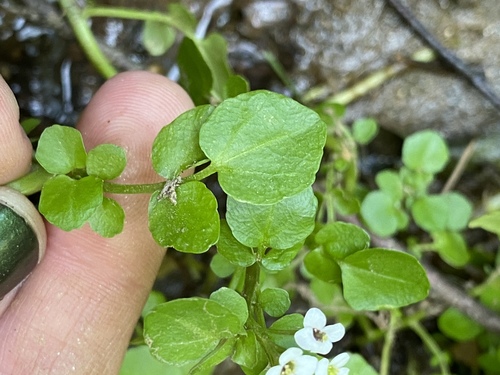
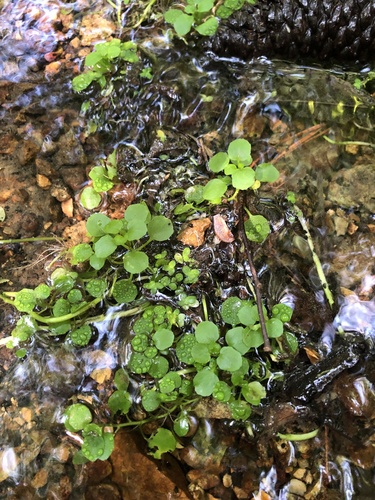
Watercress
Nasturtium officinale
Care
full sun
Mar-Nov
Evergreen
Friendly
Leaves eaten raw in salads or cooked as greens; peppery flavor
Introduced species now found in wetlands and riparian areas throughout California, non-native origin.
Care Guide
Planting
Plant watercress in full sun where it can access consistent moisture - this is a semi-aquatic plant that thrives near water sources like streams, ponds, or in boggy areas. The Calscape data doesn't specify soil type or drainage requirements, but given watercress's aquatic nature, prioritize a location that stays wet or can be regularly irrigated rather than standard garden soil. Plant during spring or fall for best establishment.
After Planting
Watercress is a fast-growing perennial that will bloom from spring through fall with small white and green flower clusters. Be aware that watercress can be quite aggressive in riparian environments - if you're not containing it near a water feature or in a dedicated bed, it may spread beyond where you want it. The main thing to watch: this plant needs consistent moisture year-round to thrive, so if you're growing it in a regular garden setting rather than beside water, plan on regular watering rather than letting it dry out between waterings.
Endangered & Threatened Species Supported
Listed under ESA; found in groundwater habitats
Wildlife Supported
Insects

Caterpillars feed on watercress leaves; multiple generations Feb-Nov in California

Major brassica pest; larval host on watercress year-round in mild California climates

Aquatic detritivore feeds on watercress; important prey for fish and birds

Larval host for this native/naturalized pierid butterfly
Mammals

Edible watercress harvested for human consumption; nutrient-rich leafy green vegetable
Amphibians

Omnivorous crayfish consumes watercress and detritus in freshwater streams
Birds

Rare winter visitor to California; feeds on mature watercress seeds when available

Aquatic bird grazes on watercress in ponds and slow-water wetland habitats

Grazes on watercress in wetland and riparian areas

Dabbling duck consumes watercress leaves and shoots in freshwater habitats