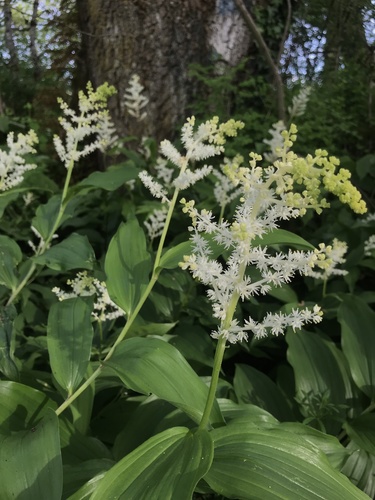
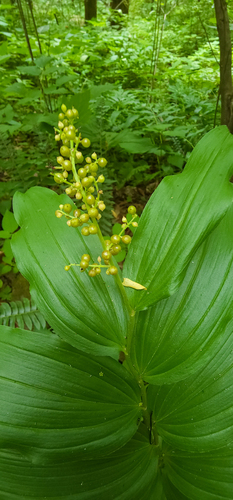
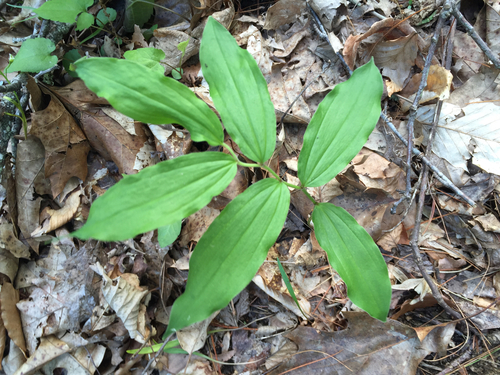
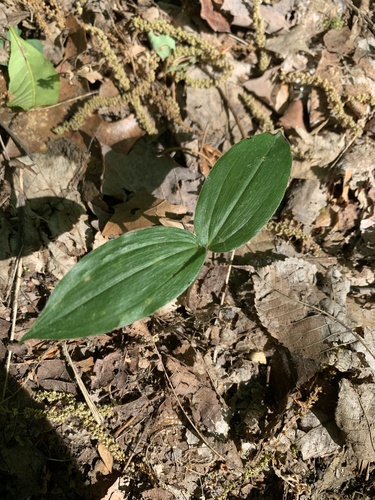
False Solomon's-seal
Maianthemum racemosum
Care
part shade
moderate
2–3ft tall
Mar-Aug
Friendly
Berries eaten raw or cooked; young shoots eaten as greens
Moist forests and shaded woodlands of the Sierra Nevada and Cascade Range from Kern County to Modoc County, 3000-8000 ft elevation, extending to Oregon and Washington.
Care Guide
Planting
Plant False Solomon's-seal in part shade with moderate water availability - it thrives in the dappled light of a woodland garden rather than full sun. It tolerates a range of soil types, so you don't need to amend heavily, but ensure your soil drains reasonably well and isn't waterlogged. Space plants according to their mature size of 2–3 feet tall. Spring is your best planting window to give the plant time to establish before summer.
After Planting
Water weekly through your first summer to keep the soil consistently moist as the plant establishes; by year two, you can back off to a moderate schedule. False Solomon's-seal blooms from March through August, so you'll see its progress over several months - no pruning is typically needed unless you're removing dead stems. The main mistake Bay Area gardeners make is planting in too much sun or letting the soil dry out completely; this plant wants the cool, moist conditions of its native Pacific Northwest habitat, so afternoon shade and consistent moisture are your keys to success.
Visit Calscape for more information about False Solomon's-seal
Endangered & Threatened Species Supported
California Species of Special Concern; migratory population declining
Wildlife Supported
Birds

Migration staging fuel Aug-Sep during northbound passage through California

Migration staging fuel, consumed during southbound migration Sep-Nov

Pre-migration frugivory Jul-Sep, preparation for long-distance migration

Fall and winter diet supplement, particularly important in early migration
Insects

Spring blooming period, specialized forager on Maianthemum flowers

Spring flower visitation, supports early-season mason bee colonies

Spring pollen collection, early season native bee activity
Spring blooming visitation, important early-season flower visitor
Spring bloom period pollinator in forest understory habitats

Spring blooming period, common generalist pollinator in California woodlands

Early season pollen source for California native bee populations

Alternative host species for Sudden Oak Death pathogen in California ecosystems