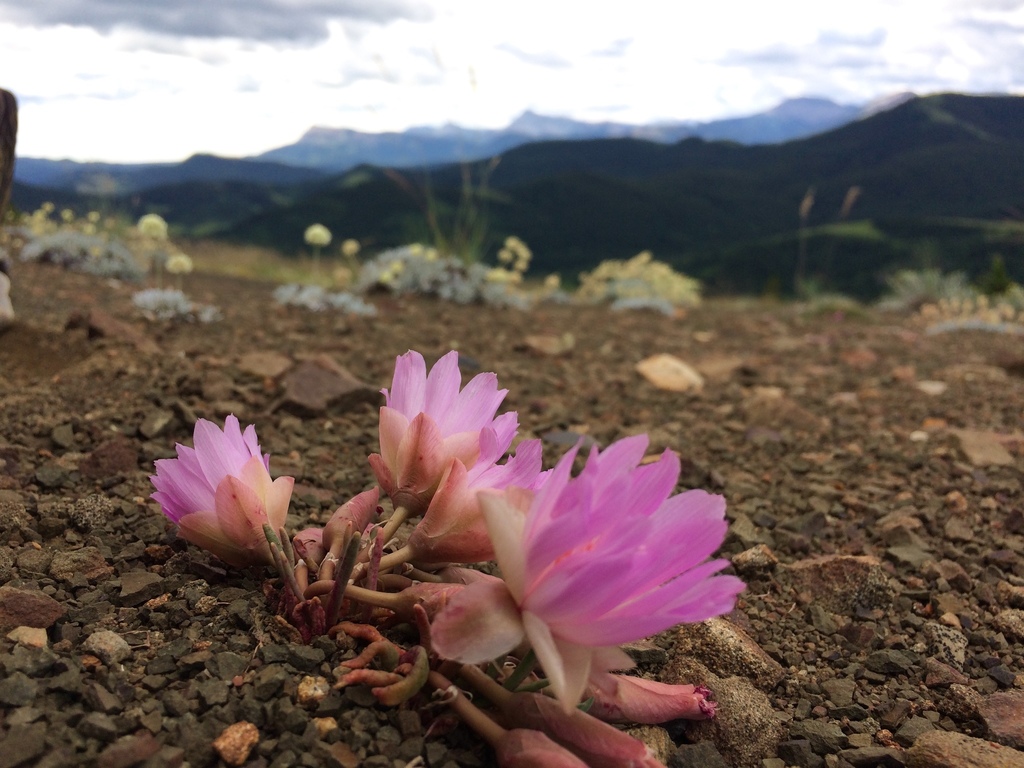
Oregon Bitter-root
Lewisia rediviva
Care
full sun, part shade
very low
Fast, Medium, Slow; Typically requires fast draining rocky or gravelly soil.
1–1ft tall , 1–1ft wide
Mar-May
Deciduous
Resistant
Friendly
Prized
Corm roasted or boiled; traditional Indigenous food
Gravelly meadows and open areas of the Sierra Nevada mountains from Alpine County to Madera County, 5000-8000 ft elevation, extending to Oregon and eastward.
Care Guide
Planting
Plant Oregon Bitterroot in full sun in a location with fast-draining, rocky or gravelly soil - this is non-negotiable, as poor drainage will rot the fleshy taproot. Spring is your best bet for planting. Space plants at least 1 foot apart and prepare the soil with coarse sand, gravel, or perlite mixed in if your native soil tends to hold moisture. This is an excellent choice for containers if your garden soil doesn't drain quickly enough.
After Planting
Once established, Oregon Bitterroot requires almost no summer water - in fact, do not irrigate during the growing season, even during dry Bay Area summers. Expect the plant to go dormant and disappear in summer, then reemerge when winter rains arrive; this is completely normal and not a sign of failure. The #1 mistake is overwatering or planting in regular garden soil: this plant evolved in high-altitude rocky areas and will die from root rot if kept moist. Beyond that, let it do its thing - dormancy, minimal care, and spring blooms are exactly what you're paying for.
Visit Calscape for more information about Oregon Bitter-root
Endangered & Threatened Species Supported
Known from very limited California locations
Wildlife Supported
Insects
Evening/crepuscular visitor to Lewisia flowers for nectar
Caterpillars feed on host plants; adults use Lewisia for nectar