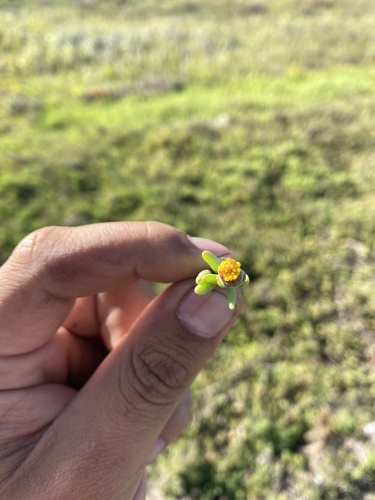
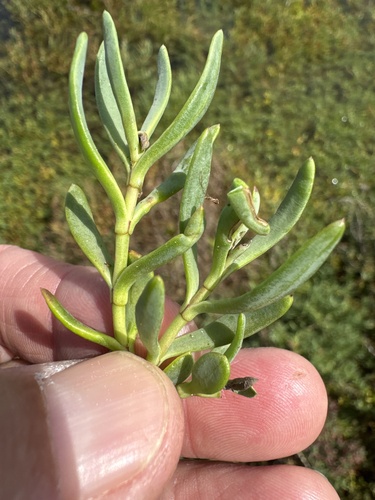
Fleshy Jaumea
Jaumea carnosa
Care
full sun
low
Fast, Medium, Slow, Standing; Tolerant of a variety of soils as long as sufficient moisture is available.
Mar-Aug
Friendly
Coastal salt marshes and estuarine areas from Mendocino County to Santa Barbara County.
Care Guide
Planting
Plant Fleshy Jaumea in full sun where it will spread as a groundcover. It's tolerant of various soil types as long as moisture is available, and can handle fast, medium, slow, or even standing water drainage - making it adaptable to most Bay Area garden conditions. Spring is the ideal planting time to establish the plant before summer.
After Planting
Water consistently through your first summer to help the plant establish its rhizome system, then you can transition to a lower water schedule once it's settled. Fleshy Jaumea is a vigorous spreader thanks to its extensive underground rhizomes, so plan for it to fill in its space generously. The #1 mistake is underwatering during establishment; this plant needs adequate moisture in year one, even though it becomes drought-tolerant later.
Endangered & Threatened Species Supported
California Species of Special Concern
Western Pygmy Blue butterfly; California species of special concern
Wildlife Supported
Birds

Primary wetland herbivore; high consumption of marsh vegetation

Winter coastal staging and resident populations feed on succulent halophytic herbs

Winter migrant feeding in coastal salt marshes

Dabbling duck grazing on wetland vegetation throughout year

Winter dabbler in brackish and salt marsh habitats

Permanent and wintering populations in coastal marshes
Insects

Spring nesting period; forages on available marsh nectar

Spring pollinator utilizing marsh plant resources

Native pollinator species in coastal California salt marshes

Migratory butterfly utilizing coastal marsh flowers

Diverse genus of small native bees foraging in coastal habitats

Small butterfly utilizing halophytic plant flowers

Early spring forager for nectar in coastal salt marsh habitats

Regional skipper butterfly foraging in salt marsh habitats