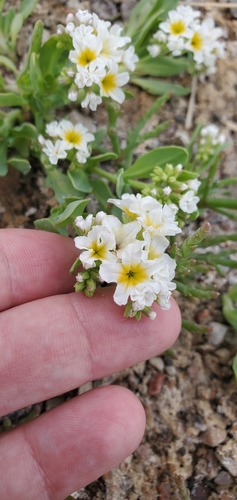
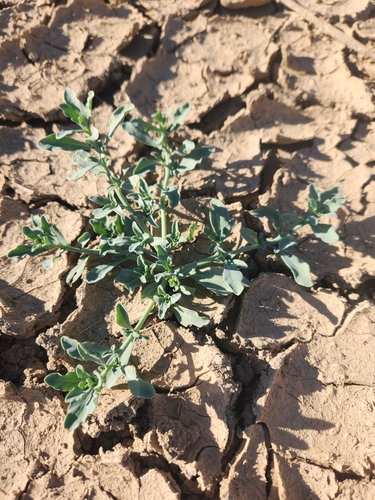
Seaside Heliotrope
Heliotropium curassavicum
Care
full sun
moderate
Grows in many soil types, often in saline or alkaline soils.
1–2ft tall
Mar-May
Friendly
Yes
Prized
Coastal salt marshes and alkaline areas throughout California from sea level to 1000 ft elevation, occurring intermittently along coasts and in interior basins.
Care Guide
Planting
Plant your seaside heliotrope in full sun (though it tolerates partial sun) in spring, ideally in a spot that mimics its natural habitat near water sources. This plant is remarkably flexible with soil - it thrives in many soil types, including alkaline or saline soils - so don't worry too much about amending. Seaside heliotrope has a creeping growth habit and stays relatively compact (1 to 2 feet tall), making it suitable for containers or as a ground cover along garden edges.
After Planting
Water occasionally once established; this plant does best with occasional supplemental water rather than constant moisture. The biggest mistake Bay Area gardeners make is overwatering - remember that seaside heliotrope is adapted to saline, often damp coastal environments, not soggy ones. Watch for white flowers with yellow centers (which turn purple as they age) blooming from March through May, and enjoy the butterflies and bees that will visit. Year 1 focus is on getting the plant established with moderate watering; specific pruning guidance isn't documented for this species.
Visit Calscape for more information about Seaside Heliotrope
Endangered & Threatened Species Supported
California Species of Special Concern; monarch populations declining
Wildlife Supported
Insects

Critical host plant for monarch caterpillars during spring-fall migration periods; essential for population maintenance

Multiple broods use as larval host throughout growing season

Caterpillars feed on flowers and developing seed pods; multiple generations annually

Primary host plant; caterpillars feed on foliage during warm months
Visits flowers for nectar; multiple broods in California

Multiple broods; caterpillars feed on foliage

True bug herbivore; feeds on plant tissues

Multiple generations use as host; common in California coastal and interior valleys
+1 more species