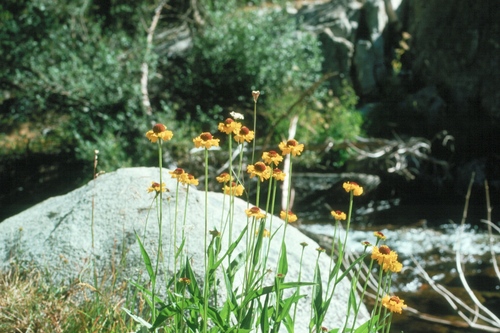
Bigelow's Sneezeweed
Helenium bigelovii
Care
full sun
moderate
Fast, Medium, Slow, Standing; Tolerant of a variety of soils as long as sufficient moisture is available.
4–4ft tall
Jun-Nov
Resistant
Friendly
Prized
Central Valley and adjacent lower foothills from the Sacramento Valley south to Kern County, below 1500 ft elevation in grassland and alkaline areas.
Care Guide
Planting
Plant Bigelow's Sneezeweed in full sun in a location that stays consistently moist - it thrives in wet habitats and meadows, so think of it as a plant that wants damp feet year-round. It's tolerant of various soil types (fast, medium, slow, or even standing water) as long as moisture is available. Plant in fall or early spring to give it time to establish before summer heat, spacing plants about 2–3 feet apart to accommodate their mature height of 4 feet.
After Planting
Water regularly during your first summer to keep the soil consistently moist; once established, this plant's water needs align with Bay Area winter and spring rains, though you may need to supplement during dry summers. Don't let it dry out completely, as moisture is key to its health. The plant flowers from June through November, and while specific pruning instructions aren't detailed, deadheading spent flowers will encourage more blooms. The #1 mistake is planting it in a dry spot expecting it to adapt - this is a wet-habitat plant, so choose a location where it naturally stays moist or be prepared to water regularly.
Visit Calscape for more information about Bigelow's Sneezeweed
Endangered & Threatened Species Supported
California endemic, limited to coastal scrub habitat in San Mateo County
Endemic to Shasta region, habitat loss
Wildlife Supported
Insects

Larval foodplant for multiple broods; active March-October

Multiple generations use as larval foodplant; spring through fall activity

Primary larval host; multiple broods April-October in California

Year-round resident in California; continuous broods on available plants

Uses as larval foodplant; multiple generations spring through fall

Larval host during main flight period May-August

Regional alpine/subalpine populations; summer larval host