Seaside Daisy
Erigeron glaucus
Care
full sun, part shade
low
well-drained, sandy; salt tolerant
0–1ft tall , 1–2ft wide
Apr-Aug · lavender, pink, white
Evergreen
Resistant
Friendly
Prized
Coastal California and Oregon
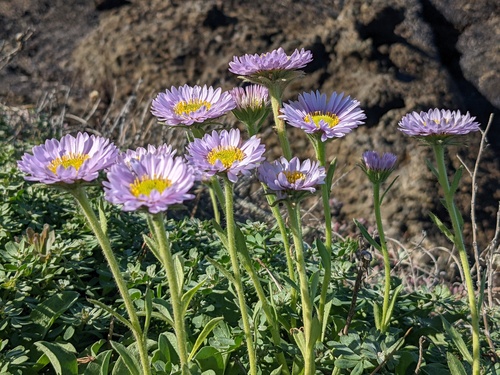
Daisy-like flowers in lavender-pink with yellow centers
'Wayne Roderick' is outstanding compact cultivar; great coastal plant
Care Guide
Planting
Plant your Seaside Daisy in full sun with well-drained soil - it thrives in sandy soils and tolerates salt, making it ideal for Bay Area coastal gardens. Space plants to allow room for spreading, as this low-growing groundcover (0.5–1.0 ft tall) will fill in over time. If you're planting inland or in containers rather than near the coast, choose a spot with excellent drainage since the plant prefers fast-draining conditions.
After Planting
Water weekly during your first summer to help it establish, then taper off significantly - once established in coastal areas, it needs essentially no supplemental water, while inland plantings need only about one watering per month in summer. Deadhead spent flowers regularly to extend the blooming season (April through August) and keep the plant looking tidy. Year one is easy: this is a low-maintenance, deer-resistant plant, so the main mistake people make is overwatering, which can rot the roots in our wet winters.
Endangered & Threatened Species Supported
California Species of Special Concern; monarch populations declining
Wildlife Supported
Insects

Spring northbound and fall southbound migration fuel Apr-May and Sep-Oct

Multiple generations Apr-Aug during bloom; key nectar source for migratory populations

California specialist; spring and early summer nectar source

Opportunistic nectar forager during bloom season

Pollen forager for provisioning larvae Apr-Aug

Multi-generational; uses as nectar source throughout growing season