California Poppy
Eschscholzia californica
Care
full sun
very low
well-drained; poor sandy soils preferred
0–1ft tall , 0–1ft wide
Feb-Sep · orange, yellow
Perennial
Resistant
Friendly
Prized
Throughout California and into Oregon
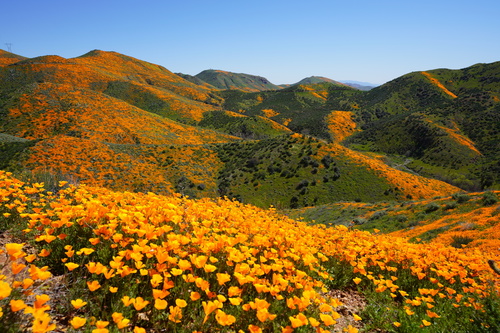
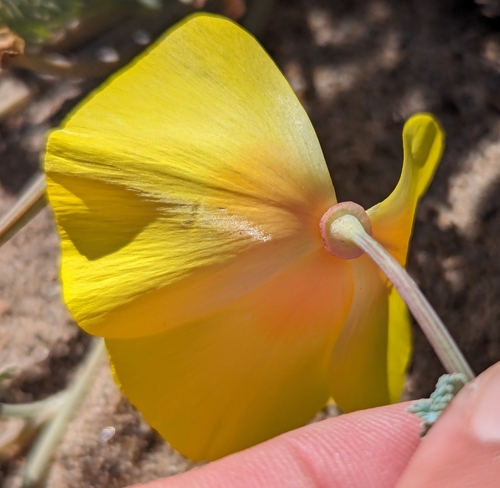
Iconic silky cup-shaped orange to golden-yellow flowers
State flower; reseeds readily; dormant in summer; annual in cold climates
Care Guide
Planting
Plant California poppies from seed in fall at the start of the rainy season for best results - this is when they naturally thrive in the Bay Area. Choose a spot with full sun (they'll tolerate part shade but prefer full sun) and ensure the soil drains fast; they're unfussy and will grow in poor, sandy, or even clay soils as long as water doesn't sit. Sow seeds directly on the soil surface without covering them with soil or mulch, and space them to allow room for plants to reach 1–2 feet tall. If you're planting nursery seedlings instead, handle them carefully since they have long, sensitive roots, and water occasionally until established.
After Planting
Water occasionally after planting seedlings until they're established, then cut back dramatically - mature plants need very low water, with a maximum of twice monthly once summer arrives. California poppies are extremely hardy and require little maintenance; just give them sunlight and well-drained soil, and they'll handle the rest. The #1 mistake is overwatering: these are drought-tough plants that prefer dry conditions, so let them dry out between waterings and they'll reward you with blooms from February through September, peaking in spring.
Endangered & Threatened Species Supported
California Species of Special Concern; monarch populations declining
Wildlife Supported
Insects

Early spring specialist (Feb-Mar); critical for ground-nesting bee provisioning

Spring nesting season (Feb-May); pollen provision for brood cells

Spring northbound migration (Feb-Apr) and fall southbound migration (Aug-Oct) fueling; critical staging resource

Multi-generational; uses poppy blooms Feb-Sep during CA population peaks

Spring and early summer adult foraging (Feb-Jun)
Mammals

Post-bloom seed collection (Jun-Sep); food caching for overwinter