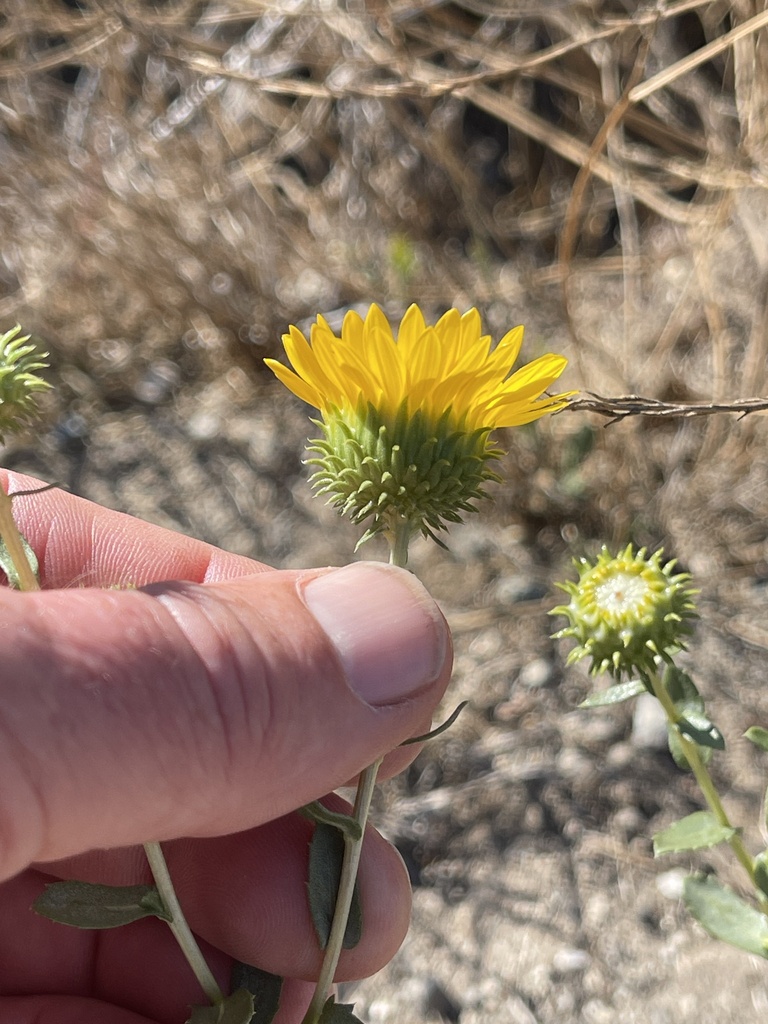
Great Valley Gumweed
Grindelia camporum
Care
full sun
very low
Fast, Medium, Slow; Adaptable. Tolerates saline soil..
2–7ft tall , 3–3ft wide
Mar-Nov
Deciduous
Resistant
Prized
Central Valley and adjacent interior regions from the Sacramento Valley south to Kern County, below 1500 ft elevation in grassland and disturbed areas.
Care Guide
Planting
Plant Great Valley Gumweed in full sun with well-draining soil - it's adaptable to fast, medium, or slow drainage and even tolerates saline soil, so soil type is rarely the problem. This is a tough native that thrives in disturbed areas, so you have flexibility with placement; just give it room to reach its full 2–6 feet in height and width. Plant it in fall or early spring when the Bay Area's cooler, wetter months support establishment.
After Planting
Water weekly during your first summer to establish a deep root system, then back off to once a month or less during summer once established - this plant is genuinely drought-tolerant and overwatering is the #1 way to fail with it. In year one, expect a somewhat gangly, branching habit with yellow flowers blooming from spring through fall; the plant will die back in winter as a deciduous perennial. Prune lightly after flowering to shape it if desired, and don't fuss with it otherwise - it's cold-hardy to 15°F and deer-resistant, so it'll handle the Bay Area without complaint.
Visit Calscape for more information about Great Valley Gumweed
Wildlife Supported
Insects
larvae develop in flower heads and buds mid-summer
larvae develop within seed heads and flowers, late summer through fall
larvae feed on leaves and developing flower buds in spring
forages on flowers during peak bloom period
early-season larval feeding on foliage and stems
feeds on plant sap throughout growing season
primary foraging resource during flowering season
early season larval feeding on new growth and young foliage
+1 more species