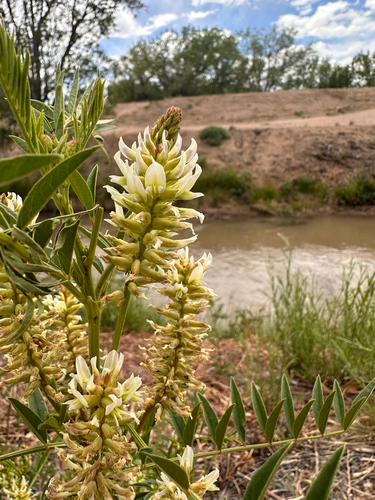
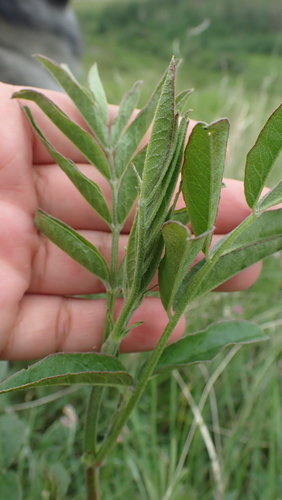
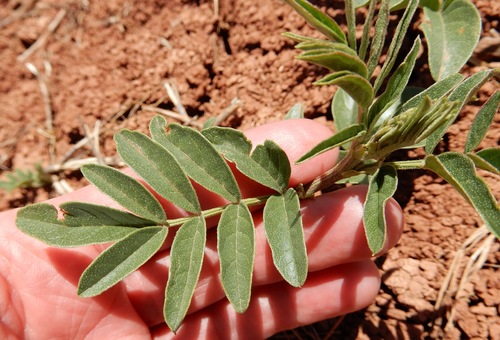
American Licorice
Glycyrrhiza lepidota
Care
full sun
moderate
Medium, Slow; Prefers sandy soils.
1–4ft tall
Mar-Aug
Friendly
Roots used as licorice substitute; chewed or made into tea/extract
Central Valley and adjacent areas from the Sacramento Valley south to Kern County, below 1000 ft elevation in riparian and alkaline areas.
Care Guide
Planting
Plant American Licorice in full sun in soil that drains slowly to medium - it tolerates heavy clay but prefers sandy soil. Space plants to account for slow rhizome spread; this plant will eventually form large patches. Plant in spring or summer. This native spreads gradually, so it pairs well with other riparian species like Leymus triticoides and Carex barbarae if you're designing a larger planting.
After Planting
Water moderately to keep soil consistently moist during the first growing season; American Licorice grows in moist conditions in nature, so don't let it dry out completely. You can reduce watering frequency once established. This plant is deciduous, so expect it to die back seasonally - this is normal dormancy, not failure. The biggest mistake is overexpecting quick spread; American Licorice advances slowly via underground rhizomes, so patience is required to see the full-patch effect.
Wildlife Supported
Insects

Larvae develop on legume foliage; multiple generations in California

Multiple generations use plant as larval food source throughout warm months

Larvae feed on legume foliage; multiple generations in California
Parasitoid of seeds; develops within developing seed pods

Adult hawk-moth forages nectar at dusk; migratory species in California

Phloem-feeding insect; overwinters as eggs in plant stems

Leaf-mining herbivore; populations peak in warm months

Polyphagous species with larvae feeding on foliage; multiple broods
+1 more species